
Replacing a settled industrial slab may be more disruptive than the condition requires. A practical industrial slab stabilization Lakewood plan starts by identifying what has moved: the concrete slab, its support, or a component of a post-tensioned structure.
Uneven floors can complicate facility operations and affect access around the site. Before choosing replacement, consider whether targeted concrete lifting or repair fits the slab’s condition. Slab settlement and post-tension damage are different problems, and they require different assessments and repair expertise.
This guide explains what to document, how polyurethane foam lifting compares with concrete replacement, and what to consider when planning work around site operations. It also outlines how RiseLock’s concrete lifting, concrete repair, and post-tension services address different structural conditions. With a clear record of the slab and its condition, you can compare options and plan the next step with less guesswork.
Key Takeaways
- Uneven areas and joints are signs to document, not a diagnosis. Identifying the slab type helps clarify what may be moving.
- For industrial slab stabilization Lakewood projects, compare options by slab condition, construction, work scope, and potential disruption to facility operations.
- Polyurethane foam lifting can fill voids and lift suitable sunken concrete slabs. Replacement may be a better fit when the existing slab’s condition or project requirements call for it.
- RiseLock’s polyurethane lifting is 50%-75% less than replacement, a relative cost consideration to weigh alongside repair scope and project fit.
- Before discussing a project, record affected areas, slab details, access needs, and operational constraints. RiseLock serves Lakewood as a PTI-certified contractor and is fully insured.
Industrial slab stabilization in Lakewood: recognize the problem before choosing a repair
Uneven industrial concrete can affect how a facility uses its slab. A change in elevation may interrupt material movement, complicate equipment routes, or affect access. These observations are useful, but they do not identify the cause on their own. Before comparing industrial slab stabilization Lakewood options, separate visible signs from the underlying issue: movement can have several explanations, and the repair needs to fit the slab’s construction and condition.
Start by recording the affected area. A marked-up site plan, photos, and notes about when the condition appeared can describe the issue without assuming what lies beneath the concrete. Include how the change affects facility operations, such as a route that has become harder to use.
What industrial slab movement may look like on site
Look for panels at different elevations, cracks that cross or follow joints, uneven joint transitions, and slab edges that no longer meet evenly. Note whether the change is isolated or extends across a wider area. If practical, photograph the same locations over time. These details help track visible changes, but a crack or low spot alone cannot show whether the slab settled, its support changed, or a structural component needs attention.
Which Lakewood site conditions deserve a closer look
Drainage patterns, backfill near the slab, and possible soil movement are useful assessment considerations, not automatic explanations. Record visible water pathways or recent site changes, but do not attribute movement to local geology or weather without site-specific evidence. An assessment can put surface observations in context and distinguish a slab issue from a concern involving post-tensioned components.
Concrete leveling includes different approaches, as summarized in this overview of methods of concrete leveling. Knowing that options exist is a starting point. Matching a method to the condition requires information about the slab and its support.
Before comparing repair options, record:
- Location and extent: Mark affected panels, joints, edges, and nearby transitions on a simple site plan.
- Visible condition: Photograph cracks, uneven surfaces, and elevation changes from consistent viewpoints.
- Timing: Note when the issue was first noticed and whether observations suggest it has changed.
- Site context: Document nearby drainage, backfill, or other visible changes without treating them as proven causes.
- Slab information: Gather available construction or repair records, including any indication that the slab is post-tensioned.
- Operational effect: Describe which areas, routes, or routine activities are affected, along with access constraints around the repair area.
This checklist gives RiseLock useful starting information while keeping the diagnosis open. Identifying whether the slab is post-tensioned matters because concrete movement and tendon concerns require different assessment and repair expertise. Reviewing the observations, slab type, and site context helps determine the next step without defaulting to replacement or assuming every uneven area has the same cause.
Choose an industrial slab stabilization method that fits the slab’s structure
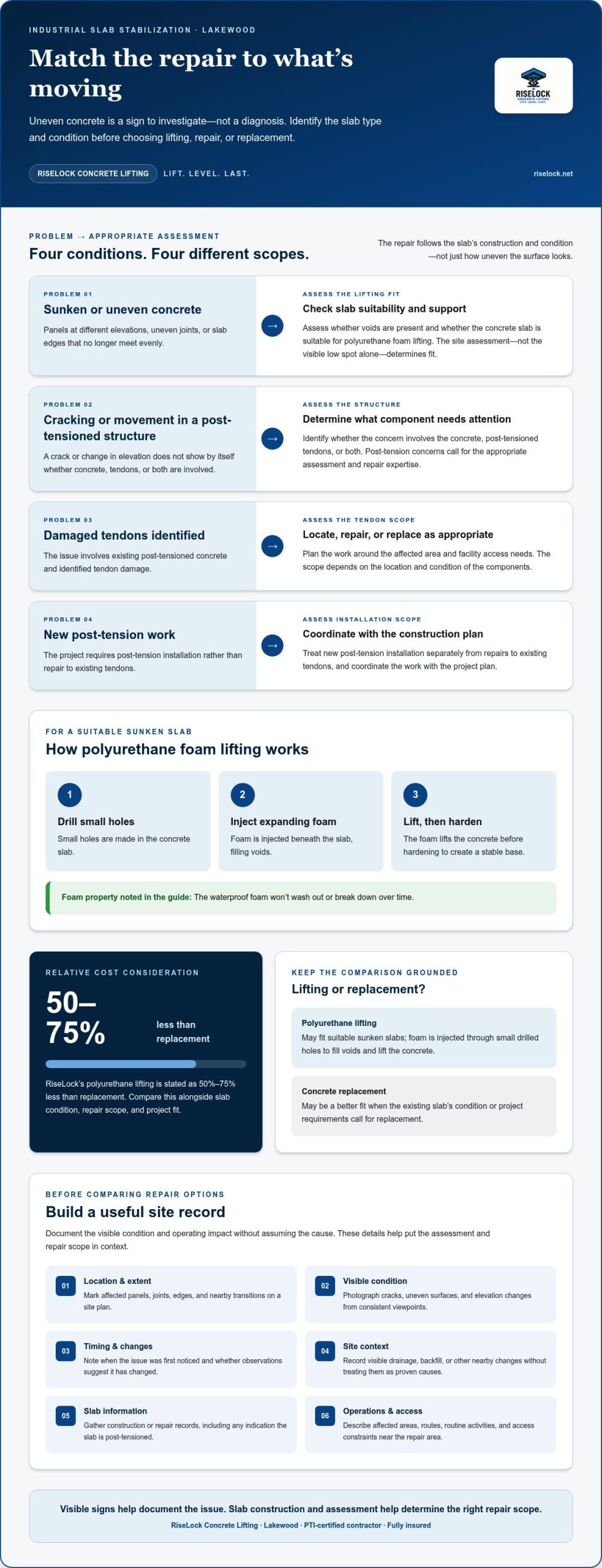
The right repair depends on more than how uneven a floor looks. A sunken concrete slab with voids beneath it presents a different issue from damage to a post-tensioned structure. For industrial slab stabilization Lakewood facilities, compare the observed condition with the slab’s construction and the work required. The repair method should follow a technical assessment, not assumptions about load capacity or the cause of movement.
| Observed problem | Slab construction | Repair scope to assess | Disruption consideration |
|---|---|---|---|
| Sunken or uneven concrete | Concrete slab suitable for lifting | Assess voids and whether foam lifting is appropriate | Foam is injected through small drilled holes; plan access around the affected area |
| Cracking or movement in a post-tensioned structure | Post-tensioned concrete | Determine whether the concern involves concrete, tendons, or both | Scope depends on the location and condition of the affected components |
| Damaged tendons identified | Existing post-tensioned concrete | Locate, repair, or replace damaged tendons as appropriate | Plan work around the repair area and facility access needs |
| New post-tension work | Structure requiring post-tension installation | Assess installation scope separately from repairs to existing tendons | Coordinate the work with the project’s construction plan |
When polyurethane foam lifting may fit an industrial slab
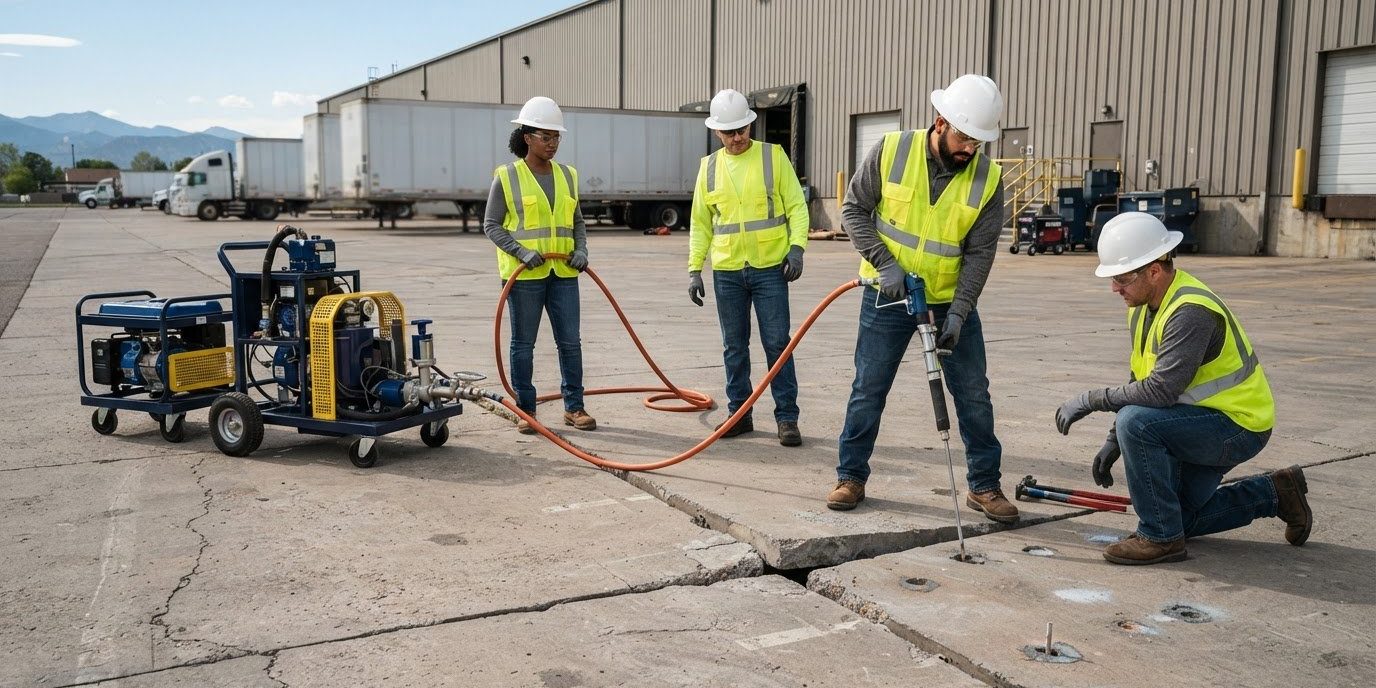
For a suitable sunken concrete slab, polyurethane foam lifting follows a defined sequence: small holes are drilled, expanding foam is injected beneath the slab, and the foam lifts the concrete before hardening. It fills voids and creates a stable base. Whether lifting fits depends on the slab and site assessment, not on a general assumption about how the floor is used. The waterproof foam won’t wash out or break down over time.
When post-tension expertise is relevant
Post-tension installation is distinct from locating, repairing, or replacing damaged tendons in an existing structure. Surface settlement alone does not establish a tendon problem, so the assessment should identify which component is affected before repair is selected. RiseLock’s post-tension installation guide explains the installation side of this work. The International Concrete Repair Institute also provides resources focused on concrete repair and restoration.
Use the comparison as a framework for technical review. Share slab records, observations, and site constraints with RiseLock so the repair scope can be matched to the structure. For a Lakewood facility weighing concrete lifting or post-tension work, discuss the slab’s condition with RiseLock as part of planning the next step.
Compare industrial slab stabilization with concrete replacement in Lakewood
Choosing between stabilization and replacement starts with the condition of the existing slab, not an assumption that one option is always more suitable or less disruptive. Lifting may be worth assessing where concrete has settled and remains suitable for restoration. Replacement may be needed when the slab’s condition or project requirements call for a broader scope. A technical assessment can clarify these situations and whether concrete repair or post-tension work is also relevant.
Use these criteria to structure the comparison:
- Existing slab condition: Is the concrete suitable for lifting, or is there damage that needs concrete repair or a different scope?
- Nature of the issue: Does the concern appear to be unevenness in the slab, or has the assessment identified a post-tensioned component that needs attention?
- Work required: Would the proposed work address the observed condition, or does the project call for removal and replacement of the concrete?
- Facility impact: What access, equipment movement, or work-area constraints should be accounted for in planning either approach?
These questions help compare like with like. A lifting proposal and a replacement proposal may involve different scopes, so consider what each is intended to address rather than comparing the methods by name alone.
Questions that help assess repair versus replacement
Ask whether the slab is intact enough for lifting, whether cracks or other damage require concrete repair, and whether the movement involves the concrete or post-tensioned components. The answers depend on the observed condition and project requirements. Stabilization is not suitable for every damaged or structurally compromised slab, and unevenness alone does not mean replacement is necessary.
How to weigh cost and disruption without guesswork
RiseLock’s polyurethane lifting is 50%-75% less than replacement. This is a relative cost comparison, not a project estimate or a guaranteed saving for a particular facility. Compare the proposed scope and what it addresses alongside cost, so a lower relative expense does not substitute for a suitable repair plan.
Disruption depends on the work area and facility operations. Most projects are completed in hours, but that timeframe does not establish how long a particular area will be inaccessible or whether operations can continue without interruption. Discuss access, affected routes, and scheduling constraints during planning. Replacement may involve a different work scope, so assess its site impact on the same project-specific basis rather than assuming either option will be simpler in every case.
For industrial slab stabilization Lakewood decisions, document the condition and compare the proposed repair’s purpose, scope, and facility impact with replacement. An assessment can clarify whether lifting is practical, whether concrete repair or post-tension expertise is needed, or whether replacement better fits the slab’s condition and project requirements.
Plan industrial slab stabilization in Lakewood around site conditions and operations
A clear site brief helps turn visible slab concerns into a focused repair discussion. For industrial slab stabilization Lakewood projects, record what is affected, identify the slab type where possible, and explain how the area is used. This information helps align the proposed repair scope with site conditions and operational constraints instead of relying on a brief description of an uneven floor.
Work through these planning steps:
- Map the affected area. Mark the panels or zones involved, then note visible cracks, joints, and elevation changes. Photos from consistent viewpoints make the condition easier to discuss.
- Identify the slab type. Gather available construction or repair records and note whether the structure is post-tensioned, if known. Distinguishing slab movement from a possible tendon concern helps frame the assessment.
- Describe site access and use. Explain how the area is reached, what facility activities take place nearby, and any access limitations that could shape planning.
- Review the proposed scope. Discuss which condition the work is intended to address and what areas it covers. Share site observations and operational constraints with RiseLock.
Prepare a useful site brief for the stabilization project
Keep the brief factual. A marked-up plan can show where cracks, joints, and elevation changes occur, while dated notes can record when staff first noticed them. Include known slab construction details and nearby access limitations. Describe operational needs plainly, such as whether a route is important to routine movement. These details help the project team understand the site without treating observations as a diagnosis.
Understand the polyurethane lifting sequence
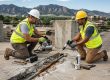
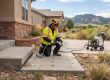
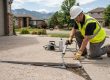
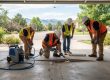
For suitable sunken concrete slabs, polyurethane lifting begins with small holes drilled in the slab. Expanding foam is injected beneath it, where it fills voids, lifts the concrete, and hardens into a stable base. The polyurethane concrete lifting guide provides more detail about this process. The appropriate scope still depends on an assessment of the slab and its condition.
Plan around the actual work area and facility needs rather than assuming a particular access arrangement or schedule. Most projects are completed in hours, but the timeframe does not guarantee a specific schedule or determine how a facility should plan its operations. Discuss the work scope and constraints together so the plan reflects the site.
Have an industrial slab in Lakewood that needs assessment? Share your site observations with RiseLock to discuss concrete lifting or repair options for the project.
Choose RiseLock for industrial slab stabilization in Lakewood
Choosing a repair partner for an industrial slab means matching the expertise to the condition under review. A settled concrete slab may call for lifting, while a concern involving a post-tensioned structure may require tendon work or concrete repair. RiseLock serves Lakewood with services for both situations, helping facility owners discuss repair scope in light of their observations and site needs.
RiseLock services for industrial concrete and post-tensioned structures
RiseLock provides Concrete Lifting and Straightening using polyurethane foam for suitable sunken concrete slabs. The foam is injected through small drilled holes to fill voids, lift the slab, and harden into a stable base. This work addresses movement in concrete and is distinct from work on post-tensioned components.
For post-tensioned structures, RiseLock provides Locating, Repairing and Replacement of Damaged Tendons and Concrete Repairs. It also provides Post Tension Installation, which is separate from locating or repairing tendons in an existing structure. Identifying which part of the structure is affected helps shape the work discussion. A broader overview of restoration options is available in the concrete lifting solutions buyer’s guide.
RiseLock is a PTI-certified contractor and fully insured. These credentials support its post-tension work, while its concrete lifting and repair services address different conditions. RiseLock’s assurance is straightforward: “we guarantee the job is done right.”
Move from assessment to a project conversation
A useful discussion starts with the condition you’ve observed and how the affected area is used. Share where the slab has shifted, what visible damage is present, whether the structure is known to be post-tensioned, and any access or operational constraints that may shape planning. These details help focus the conversation on the affected concrete or structural components rather than treating every uneven slab as the same repair problem.
For industrial slab stabilization Lakewood facilities can discuss concrete lifting, concrete repair, or post-tension work with RiseLock based on the project’s needs. The next step is to review the observations and outline the proposed scope, including which condition the work is intended to address. A project estimate can then be prepared for that scope.
If an industrial slab is settling or showing damage, contact RiseLock to discuss the slab condition and request a project estimate. Bring the site observations and operational considerations you’ve gathered. A focused project conversation can help clarify which service aligns with the structure and what repair approach merits consideration.
Turn your slab assessment into a clear next step
A useful repair decision should leave your facility team with more than a preferred method. Record what the proposed work is intended to address, which areas are in scope, and what operational considerations need to shape planning. This gives maintenance and facility stakeholders a shared basis for reviewing the project and coordinating the next phase.
For industrial slab stabilization Lakewood properties, a clear project conversation can connect site observations with an appropriate repair scope. RiseLock is a PTI-certified contractor and fully insured. Most projects are completed in hours, and polyurethane lifting is 50%-75% less than replacement. These details can inform planning, while the right approach and schedule depend on the specific project.
Bring forward the notes that matter to your facility, including the slab condition and operational needs. Discuss your Lakewood slab stabilization project with RiseLock and request a project estimate. A considered next step can help your team move from uncertainty toward a practical plan.
Frequently Asked Questions
How much does industrial slab stabilization cost in Lakewood?
The estimate for an industrial slab stabilization Lakewood project depends on the slab’s condition and the repair scope. RiseLock’s polyurethane lifting is 50%-75% less than replacement. That’s a relative comparison, not a project quote or a guaranteed saving. To make an estimate discussion more useful, describe the affected area and whether you’re considering lifting, concrete repair, or replacement.
How long does industrial slab stabilization take?
Most projects are completed in hours. The work scope and site conditions affect project planning, so this timeframe does not set a schedule for every facility. Before scheduling, identify which areas may need work and explain operational constraints, such as access windows or activities near the repair area. This helps the project discussion address timing without assuming facility operations can continue uninterrupted.
Can polyurethane foam be used on a post-tensioned slab?
Foam lifting may be considered for a suitable sunken slab, but on a post-tensioned structure it is important to distinguish concrete movement from a tendon concern. Foam lifting addresses suitable concrete slabs; it is not a substitute for locating, repairing, or replacing damaged tendons. Share available slab drawings or construction records during assessment so the concrete condition and any post-tension concerns can be considered separately.
Does polyurethane foam wash out or break down over time?
RiseLock’s waterproof foam won’t wash out or break down over time. This describes the foam’s durability, but it does not determine whether lifting is suitable for a particular slab or explain the cause of movement. The project still requires an assessment of the concrete and the condition beneath it. Share known site changes or repair history so those details can inform the discussion.
Is industrial slab stabilization always a better option than replacement?
No. Stabilization is not the right choice for every slab. Lifting may suit some settled concrete, while extensive damage or project requirements may call for concrete repair or replacement. Compare the condition of the existing slab and what each proposed scope would address. If the structure is post-tensioned, assess tendon concerns as a distinct issue rather than assuming they are ordinary slab settlement.
What information should I have ready before requesting an industrial slab estimate?
Prepare photos, a site plan marking affected areas, notes on when changes appeared, and available slab or repair records. Include whether post-tensioned construction is known, plus access limits and nearby operations that could shape planning. RiseLock serves Lakewood, Denver, Aurora, Centennial, Parker, Colorado Springs, Englewood, Littleton, Lakewood, Arvada, Thornton, Wheatridge, Castle Rock, Castle Pines, and Boulder. Share these details when discussing the estimate.