What if the concrete beside your home is sinking, but the foundation itself isn’t moving? That distinction matters when you need to repair sunken concrete around foundation Castle Rock. A settled walkway or patio can look alarming, and concerns about water, erosion, or shifting soil are understandable. But lifting a slab and addressing movement in a foundation wall or footing are different repairs.
This guide explains how to observe changes that may point to slab settlement or a broader foundation concern, when polyurethane lifting may suit the concrete, and what to expect from a project-specific assessment in Castle Rock. Cracks around doors or windows, sticking doors, and sloping floors can offer useful context, though no single sign confirms the cause.
You’ll learn how drainage and soil movement can affect concrete around a home, how high-density foam lifts a suitable sunken slab, and why the repair method should match the movement. Identifying what has settled helps you choose a focused next step and avoid treating a slab repair as a fix for foundation movement.
Key Takeaways
- Track changes in the slab and nearby surfaces over time. Settling backfill, dry-period soil shrinkage, and water erosion are possible contributors.
- Look at the wider pattern around your home to distinguish a settled walkway or patio from signs that foundation movement may need attention.
- Consider the slab’s condition, access, and layout when deciding whether polyurethane lifting may be suitable.
- For repair sunken concrete around foundation Castle Rock, remember that lifting can raise and stabilize suitable slabs, but it doesn’t repair a moving foundation wall or footing.
- RiseLock uses high-density foam to lift and stabilize suitable slabs, with the repair plan shaped by the concrete and site conditions.
Sunken Concrete Around a Castle Rock Foundation: What Has Actually Settled?
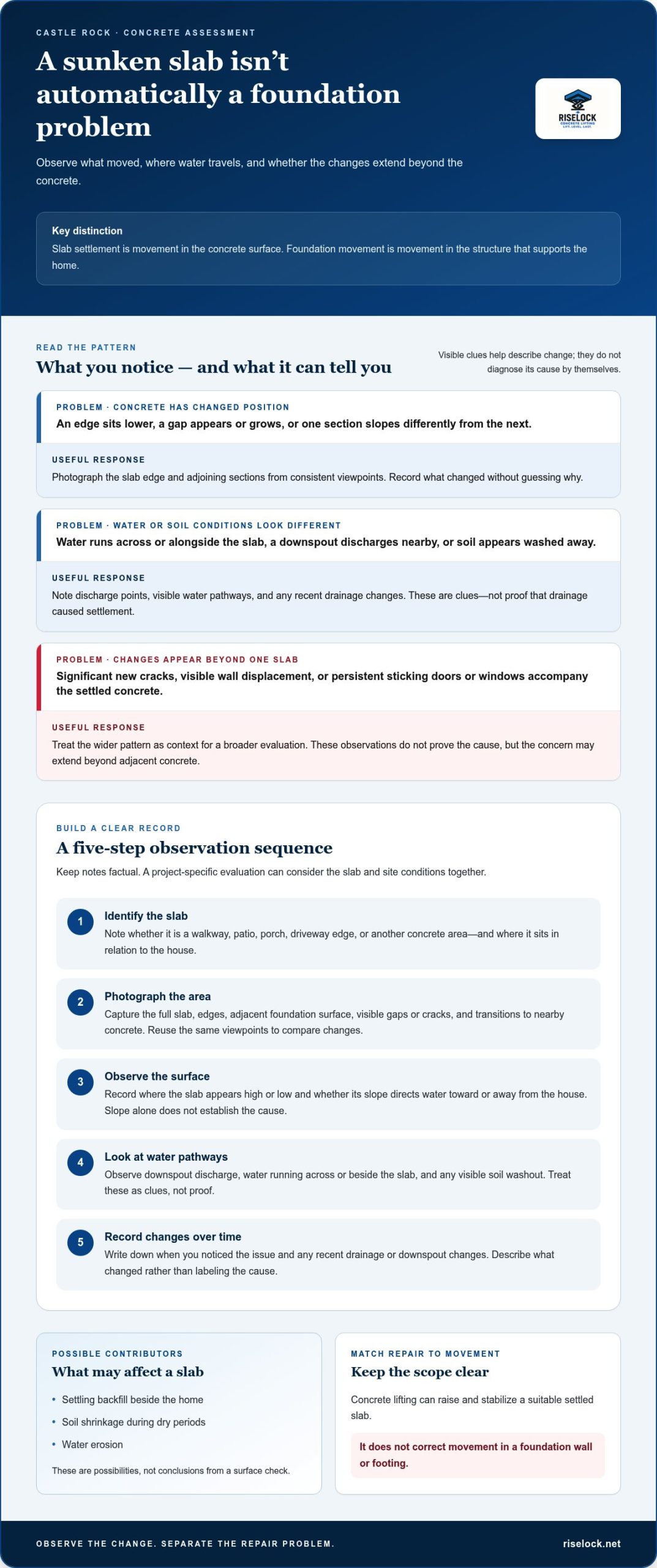
A walkway or patio that has dropped beside your home does not automatically mean the foundation is failing. The slab may have moved independently, leaving an uneven edge, a gap, or a change in slope where it meets the house. That distinction matters: concrete lifting can address a suitable settled slab, but it won’t correct movement in a foundation wall or footing.
“Slab settlement is movement in the concrete surface; foundation movement is movement in the structure that supports the home.”
Sunken adjacent concrete can appear along foundation-side walks, patios, porch slabs, or concrete beside a garage. Here, “sunken” describes the slab’s position relative to nearby surfaces. It isn’t a structural diagnosis by itself. A Foundation (architecture) serves a different purpose from the exterior flatwork around it, so don’t treat the two as one repair problem based on appearance alone.
For homeowners researching how to repair sunken concrete around foundation Castle Rock, the first step is to establish what has changed and where. Observe the slab and the house separately, then look for patterns instead of trying to identify a structural cause from one crack or uneven edge.
Which visible changes suggest a settled slab?
Look for an edge that sits lower than an adjoining section, a gap that appears or grows beneath the slab, or a surface that slopes toward the house. For example, a patio may have separated from a porch slab, or one section of a walkway may sit noticeably below the next. These clues show a change in the concrete’s position, but they don’t establish why it moved.
Keep a simple record. Take dated photographs from the same angles, include the slab edge where it meets the house, and note when you first noticed a change. Record whether adjoining sections appear to be shifting too. This helps describe the progression without turning a visual check into a do-it-yourself structural diagnosis.
When might the concern involve the foundation itself?
A single exterior slab that has dropped, with no other notable changes, is a different pattern from movement across foundation walls or several areas of the home. Pay attention to significant new cracks, visible wall displacement, or persistent interior changes such as doors or windows that continue to stick. These observations don’t prove the cause, but they can indicate that the concern extends beyond adjacent concrete.
In Castle Rock, possible contributors to slab movement include settling backfill, soil shrinkage during dry periods, and water erosion. These are possibilities, not conclusions to draw from a surface check. If foundation-related signs appear alongside the settled slab, a broader evaluation can help clarify what needs attention before a repair plan is chosen.
Keep the repair scope clear: lifting nearby concrete can raise and stabilize a suitable slab, but it does not correct structural movement in the foundation itself. Identifying which element has moved is the first step toward matching the repair to the problem.
How to Assess Sunken Concrete Near a Castle Rock Foundation
A careful assessment starts with observations, not assumptions. The slope of a slab or the direction of water flow can offer useful clues, but neither proves what caused settlement. In Castle Rock, possible contributors include settling backfill beside the home, soil shrinkage during dry periods, and water erosion. Record what you can see and how conditions change; a project-specific evaluation can then account for the site and the slab.
Use this sequence to build a clear record:
- Identify the slab. Note whether the affected area is a walkway, patio, porch, driveway edge, or another section of concrete. Record where it sits in relation to the house.
- Photograph the area. Take pictures of the full slab, its edges, the adjacent foundation surface, visible gaps or cracks, and transitions to nearby concrete. Use consistent viewpoints so you can compare changes over time.
- Observe the surface. Note where the slab appears high or low and whether its slope directs water toward or away from the house. Don’t infer the cause from slope alone.
- Look at water pathways. Observe where downspouts discharge, whether water visibly runs across or alongside the slab, and whether soil appears washed away. These are clues, not proof that drainage caused the settlement.
- Record changes. Write down when you noticed the issue and any recent changes to drainage or downspout discharge. Changes in timing or location can inform an assessment, but they don’t establish causation.
What should you document before arranging an assessment?
Keep dated photographs and short notes together. Include close views of gaps and cracks as well as wider shots showing how the slab meets the home and adjoining sections. Describe what changed without labeling the cause. For example, record that water now exits a downspout near the patio, rather than concluding that it washed out the soil beneath it.
Near a foundation, where water comes from and where it travels matter as much as where it appears. Surface slope, discharge points, and visible washout help show site conditions around the slab, but they don’t reveal what is happening below ground by themselves.
How can you separate a slab concern from a wider pattern?
Compare the affected concrete with nearby slabs and visible foundation surfaces. Note whether the change seems limited to one section or appears alongside changes in other areas. A record that separates observations about the slab from observations about walls or interiors gives an assessment a more useful starting point, without treating a visual pattern as a structural diagnosis.
For broader repair context, see this guide to concrete repair in Denver, Colorado. If your observations point to a settled slab, a project-specific concrete-lifting assessment can help determine whether lifting suits its condition and site layout. This helps clarify what needs attention before choosing a repair.
Is Polyurethane Lifting Suitable for Sunken Concrete Around a Foundation?
Polyurethane lifting may suit a concrete slab that has settled but remains in condition to be raised and stabilized. It isn’t the right answer for every slab or every movement near a home. Suitability depends on the concrete’s condition, access to the area, how the slab is laid out, and what site observations suggest about the movement.
Lifting and replacement address a settled surface in different ways. Lifting works with the existing slab; replacement removes and replaces concrete that may be too damaged or unsuitable to lift. Neither option should be chosen from appearance alone. If a foundation wall, footing, or other structural component is moving, lifting nearby concrete won’t repair that movement.
What does polyurethane concrete lifting do?
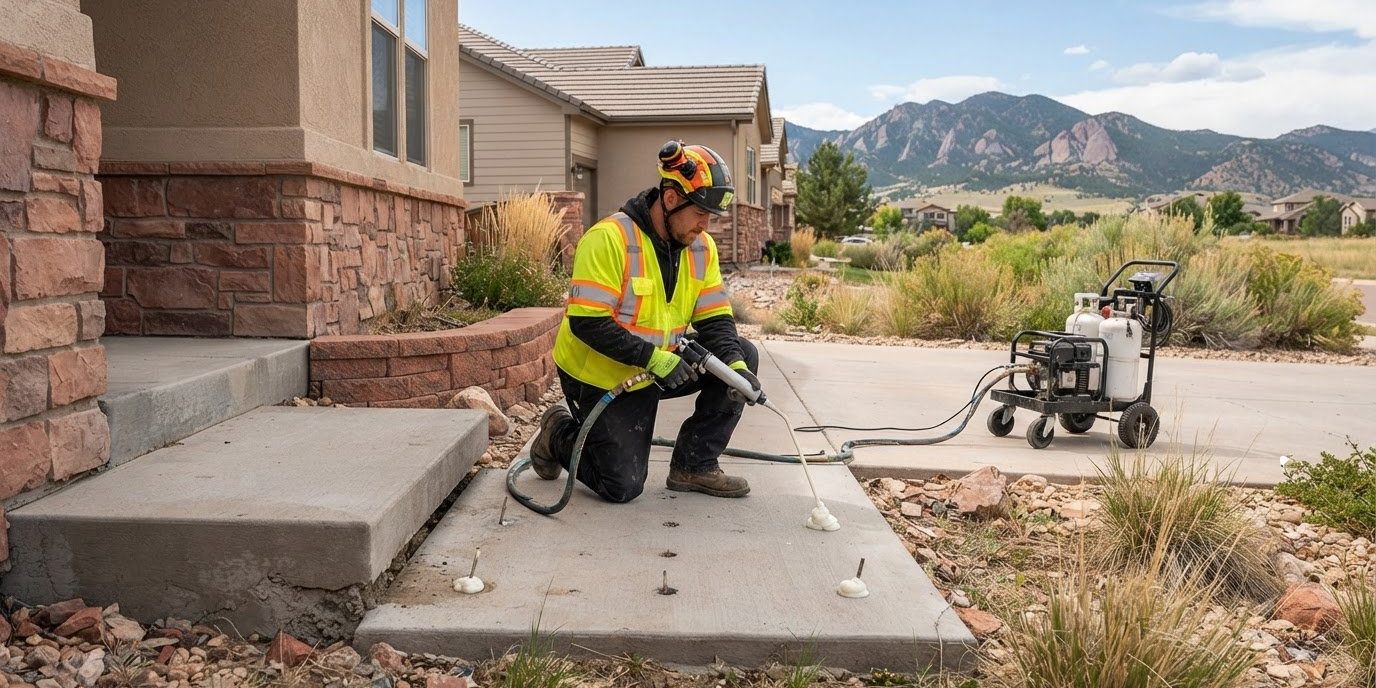
For a suitable slab, polyurethane lifting uses small injection points to place high-density foam beneath the concrete. The foam lifts and stabilizes the slab, allowing the existing surface to remain in place rather than removing and replacing it. The method can be a practical fit when the concrete is sound enough to lift and the site allows access for the work. It doesn’t address every underlying soil or drainage condition, or repair the foundation itself.
The distinction is useful: stabilization focuses on the slab’s position, while replacement renews the concrete itself. For a deeper explanation of the method and how it works, see this guide to polyurethane concrete lifting.
When does lifting need a different repair plan?
Concrete that is severely damaged or otherwise unsuitable to raise may call for a different approach, such as replacement. A slab that has settled beside a foundation also needs to be considered separately from foundation walls, footings, or structural components showing movement. The table outlines common observations and the limits of what they can tell you.
| Observed issue | Possible path | Key limitation |
|---|---|---|
| Slab is settled, with concrete in liftable condition | Assess polyurethane lifting to raise and stabilize the existing slab | Suitability depends on slab condition, access, and site conditions |
| Concrete is badly damaged or unsuitable to lift | Consider whether replacement better fits the project | Replacement involves removing and renewing the concrete, not simply raising it |
| Foundation wall, footing, or structural element shows movement | Separate the structural concern from the adjacent slab repair | Concrete lifting does not repair structural foundation movement |
Results depend on site conditions and a repair plan matched to the problem; no lifting method can promise the same outcome in every setting. For homeowners weighing how to repair sunken concrete around foundation Castle Rock, a project-specific assessment can clarify whether the slab is suitable for lifting or needs another approach. A concrete-lifting assessment connects the observed slab condition and site layout to a considered repair plan.
How a Castle Rock Concrete-Lifting Project Around the Foundation Proceeds
A concrete-lifting project begins with understanding the slab and conditions around it, not with a fixed repair recipe. Its location beside a foundation can affect access and planning, while the slab’s layout and condition help determine whether lifting is appropriate. Site observations, including visible gaps and drainage patterns, also inform a plan suited to the property.
The process generally moves through assessment, scope planning, lifting work, and a review of the repaired area. The scope and lift depend on the project, so homeowners shouldn’t expect one standard duration or a preset amount of movement for every property.
What information helps define the repair scope?
Before an assessment, note where the concrete sits and its approximate dimensions. Describe visible gaps and cracks, and how the slab relates to nearby foundation features. Dated photographs can show the full area and close details, while notes about drainage, downspout discharge, or recent site changes add useful context. These details help frame the issue, but an assessment of the site determines whether lifting fits the slab and conditions.
A project plan considers practical details together. A narrow walkway beside a wall presents different access and layout questions from a broad patio with several connected sections. The concrete’s condition matters too: planning must account for whether the existing slab is suitable to lift, rather than assuming every settled surface can be treated the same way.
What should homeowners expect during the work?
Once the scope is established, the lifting work follows the project-specific plan. For suitable concrete, RiseLock uses high-density polyurethane foam to raise and stabilize the slab. The work area and access needs depend on the property layout and the concrete being treated. Afterward, the repaired area is reviewed in relation to the planned work; this review does not mean that a nearby foundation wall or footing has been repaired.
Clear communication about the target slab and surrounding conditions helps keep the scope focused. Concrete lifting can address suitable settled slabs, but the plan should reflect the assessment rather than presume the cause or promise a particular result. For broader project-selection context, concrete lifting solutions in Colorado can help explain how project needs shape a repair approach.
If you’re planning how to repair sunken concrete around foundation Castle Rock, gather your photos, approximate dimensions, and notes about visible drainage changes. Then request a concrete-lifting assessment to discuss a project-specific plan for the slab and site.
Choose RiseLock for Sunken Concrete Repair Around Your Castle Rock Foundation
A settled walkway, patio, or porch slab calls for a repair plan built around the concrete and conditions at the property. RiseLock provides polyurethane concrete lifting and leveling for residential and commercial properties in Castle Rock, using high-density foam to lift and stabilize suitable sunken slabs. It’s a modern alternative to traditional mudjacking when the existing concrete is appropriate to raise rather than replace.
The distinction between slab repair and foundation repair remains essential. Polyurethane lifting addresses the position and stability of suitable concrete surfaces. It does not repair a moving foundation wall, footing, or other structural part of the home. A project assessment should account for that boundary and identify whether the concern is limited to the slab or includes signs that need a broader evaluation.
Why consider RiseLock for a settled concrete slab?
RiseLock’s concrete-lifting work focuses on raising and stabilizing sunken concrete with high-density foam rather than traditional mudjacking. Keeping a suitable slab in place can offer an alternative to concrete replacement, depending on its condition and the site. The method isn’t a blanket solution for every damaged surface or underlying condition; the repair scope should match what the slab and site show.
That project-specific approach matters beside a foundation. A patio slab, narrow walk, or garage-adjacent section may each have different access, layout, and condition considerations. A sound plan responds to those details instead of assuming the same lifting scope will suit every property. Results depend on site conditions, so expectations should stay grounded in the assessment and planned work.
What is the next step for your Castle Rock property?
To describe the project, note where the slab is located and what has changed. Include approximate dimensions, visible gaps or cracks, and whether adjoining concrete appears affected. Photographs showing both the full area and close details can make the location and condition easier to understand. If you’ve observed drainage changes or soil loss nearby, include those observations as context without treating them as a confirmed cause.
A project-specific assessment considers these details alongside the slab’s condition, access, and site layout to shape the repair plan. For homeowners looking to repair sunken concrete around foundation Castle Rock properties, the first decision is what the movement affects and whether the adjacent slab is suitable for lifting. RiseLock assesses concrete-lifting projects while keeping slab stabilization distinct from structural foundation work.
RiseLock provides concrete lifting and leveling in Castle Rock and nearby communities, including Denver, Aurora, Centennial, Parker, Colorado Springs, Englewood, Littleton, Lakewood, Arvada, Thornton, Wheatridge, Castle Pines, and Boulder. Describe your slab’s location and visible changes, and request a concrete-lifting assessment to take the next step toward a repair plan shaped around your property.
Move Forward With a Clear Repair Plan
Uncertainty eases when the next decision is based on what the concrete and surrounding site show. Rather than treating every low spot as the same problem, describe what changed, where it happened, and whether the concern appears limited to the slab. That gives an assessment a practical starting point without asking you to diagnose the structure yourself.
If you’re ready to repair sunken concrete around foundation Castle Rock, focus on a plan that fits the specific slab and site conditions. A clear scope keeps the concrete work aligned with the issue being addressed and any separate foundation concerns distinct.
Share the slab’s location and what you’ve observed to take the next step. Request a concrete-lifting assessment and move toward a considered repair plan for your property.
Frequently Asked Questions
Can sunken concrete beside a foundation be lifted without replacing it?
Yes, an existing slab may be liftable if its condition and the site suit polyurethane concrete lifting. For example, a slab that has settled but remains sufficiently intact may be a candidate, while concrete with extensive breakage may need a different plan. The assessment considers the slab as a whole, including its edges and joints. Lifting can preserve suitable concrete, but it isn’t appropriate for every surface.
How do I know whether my concrete slab or foundation is settling?
You can’t reliably identify the cause from one crack or low spot alone. A slab concern may appear confined to a walkway or patio, while changes in foundation walls or persistent movement inside the home may indicate a broader issue. Note whether several areas are changing and whether doors or windows repeatedly stick. Those patterns help describe the concern, but an appropriate assessment is needed to determine what has moved.
Will polyurethane foam lifting damage a nearby foundation?
Polyurethane lifting is intended to raise and stabilize suitable concrete, not to move or repair a foundation. The work plan should account for the slab’s position beside the home and the site conditions. Don’t assume that proximity alone makes a slab suitable or unsuitable. If the foundation wall or footing shows movement, distinguish that concern from the adjacent slab before deciding on concrete lifting.
What causes concrete around a Castle Rock home to sink?
Possible contributors include settling backfill, soil shrinkage during dry periods, and water erosion near the slab. Castle Rock’s expansive clay soils can change volume as moisture conditions shift, which may affect the ground around concrete. A downspout outlet or visible washout can provide useful context, but neither confirms the cause. Consider the pattern of movement and site conditions together.
How long does it take to lift sunken concrete around a foundation?
There isn’t one reliable duration for every project. The work plan depends on factors such as the slab’s size and condition, access around the foundation, and the amount and pattern of settlement. A compact walkway and a larger connected patio may require different scopes. An assessment establishes what the project involves; avoid relying on a time estimate that assumes every property has the same layout and repair needs.
How much does it cost to repair sunken concrete in Castle Rock?
Project cost depends on the concrete area, its condition, the lift required, access, and site conditions. For a project to repair sunken concrete around foundation Castle Rock, those details matter more than a general estimate. Photos and approximate dimensions can help describe the work, but the slab and site need to be assessed to define the project scope and pricing.
Will concrete lifting fix water problems beside my foundation?
No. Lifting can address the position of suitable settled concrete, but it doesn’t redirect a downspout, correct runoff, or resolve ongoing water entry. If water continues to collect or wash soil away, that condition may persist after the slab is lifted. Note where water comes from and where it flows, then treat drainage concerns as a separate part of understanding the site and planning appropriate next steps.