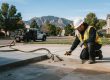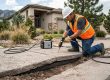
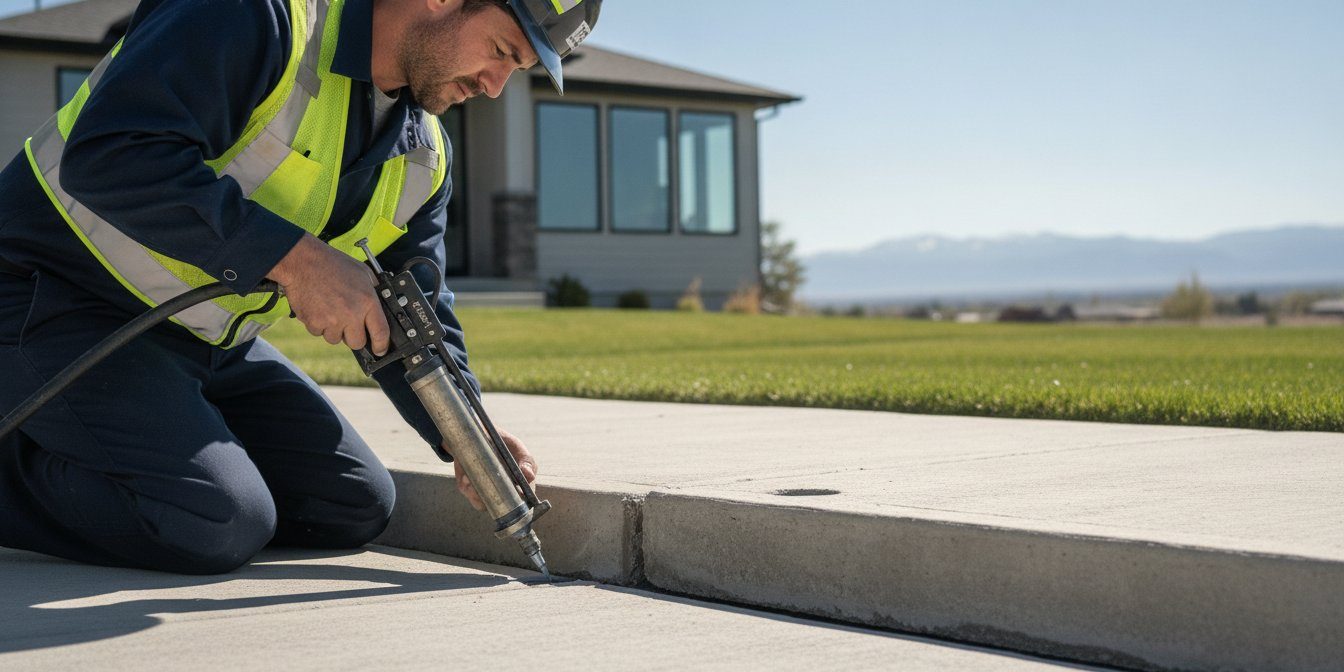
In Centennial, the ground beneath your feet is constantly in motion, shifting as much as six inches due to the expansive clay soils and nearly 150 annual freeze-thaw cycles. This relentless movement creates dangerous vertical offsets that make it nearly impossible to shovel snow and leave you worried about a neighbor taking a fall on your property. If you need to fix trip hazard on sidewalk Centennial homeowners often feel stuck between the high cost of full replacement and the eyesore of temporary patches. You shouldn’t have to choose between safety and your home’s curb appeal.
We understand that a structural issue like a sunken slab feels like a personal burden, but modern technology offers a precise, non-invasive solution. This guide will show you how to evaluate these hazards and resolve them permanently using high-density polyurethane foam. We’ll walk through why this lightweight material is the only option designed to withstand Colorado winters without ruining your lawn. By the end, you’ll know exactly how to restore your sidewalk to a flush, safe condition that lasts for years.
Key Takeaways
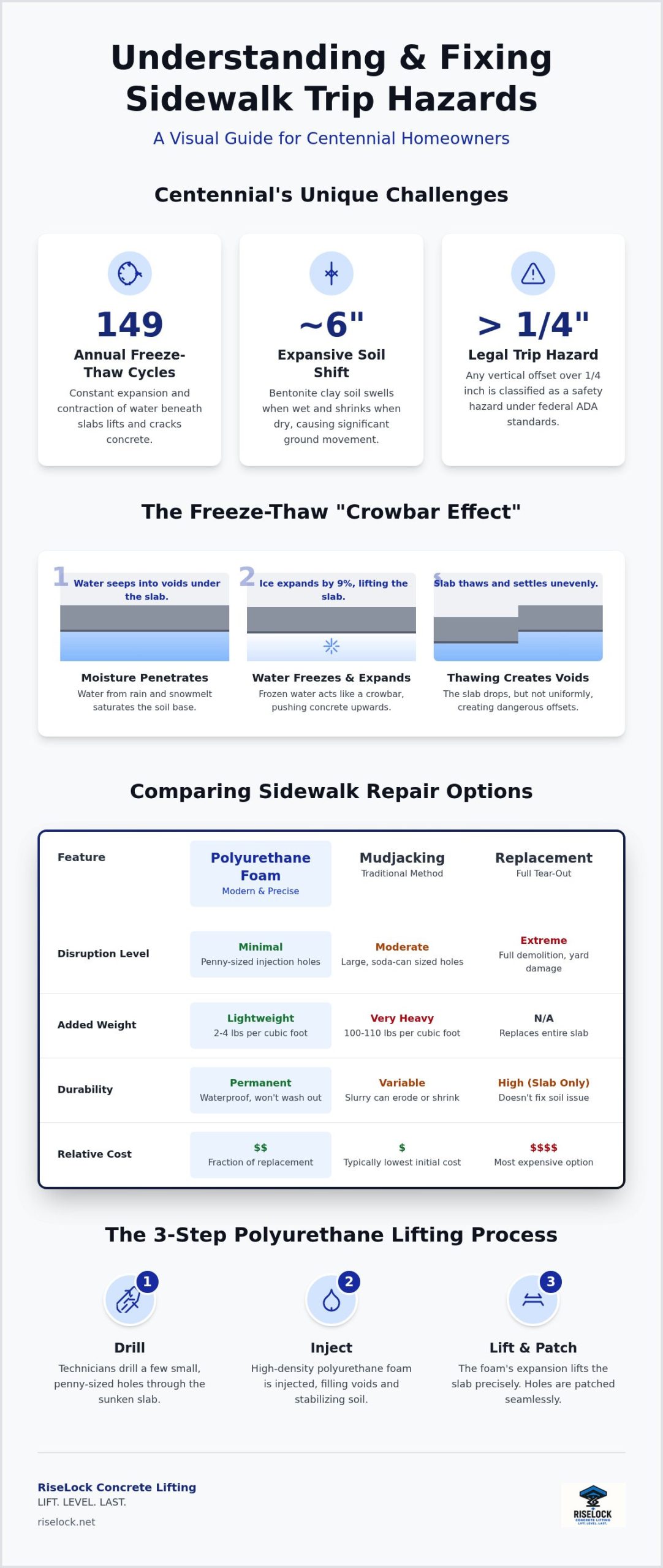
- Learn how to identify vertical displacements over 1/4 inch, which are legally classified as safety hazards under federal ADA standards.
- Understand how Centennial’s expansive clay soils and 149 annual freeze-thaw cycles specifically contribute to sidewalk settlement and heaving.
- Discover how to fix trip hazard on sidewalk Centennial properties using high-density polyurethane foam that stabilizes the slab without the excessive weight of traditional mudjacking.
- Explore the precision repair process that utilizes penny-sized injection holes to lift concrete with minimal disruption to your lawn or landscape.
- See why polyurethane lifting provides a permanent, weather-resistant solution at a fraction of the cost of full concrete replacement.
Identifying Sidewalk Trip Hazards in Centennial: Safety Standards
Centennial’s residential landscape, particularly in established neighborhoods like Heritage Village and Southglenn, faces a recurring structural challenge. The underlying soil, rich in bentonite clay, expands and contracts based on moisture levels. This movement eventually forces sidewalk panels out of alignment. When a slab sinks or heaves, it creates a vertical offset that’s more than a cosmetic flaw; it is a significant liability.
Identifying these issues requires a disciplined eye for detail. You should look for “lips” where two panels meet, as these are the primary points of impact for pedestrians. During the spring melt, observe where water ponds on the concrete. Standing water indicates a loss of proper pitch, which often precedes deeper settlement. If you need to fix trip hazard on sidewalk Centennial homeowners must recognize these early warning signs before they escalate into larger safety concerns.
The 1/4-Inch Rule and Your Liability
Safety standards for public walkways are governed by the Americans with Disabilities Act (ADA), which provides a clear metric for risk. Any vertical change in height between adjacent sidewalk panels of 1/4 inch or more is considered a trip hazard. While this may seem like a minor deviation, these small edges become treacherous under a layer of Centennial’s winter snow, where they are hidden from view but still present a physical obstacle.
Homeowners are often tempted to “grind” down the high edge of a slab to remove the lip. This approach is usually a temporary and unsightly fix that weakens the concrete’s structural integrity and does nothing to stabilize the ground beneath. Instead, professional concrete leveling addresses the root cause by restoring the slab’s original elevation through precise intervention. A trip hazard is formally defined as any vertical displacement exceeding 1/4 inch that creates an abrupt change in the walking surface. Ignoring these offsets increases your liability if a neighbor or passerby is injured on your property.
Common Centennial Trouble Spots
Certain environmental factors in our local area accelerate concrete failure. In older parts of the city, mature Silver Maples and Cottonwoods possess powerful root systems that can easily heave heavy concrete slabs several inches. These biological forces are difficult to counter without professional intervention, as the roots thrive in the moist environment beneath the sidewalk.
Other trouble spots include:
- Driveway Aprons: Sections near the curb often catch street runoff, which saturates the base and leads to rapid sinking.
- Downspout Exit Points: Concentrated water flow from gutters can wash out the sub-grade soil, leaving the sidewalk unsupported and prone to cracking.
- Utility Trenches: Older walkways over settled utility lines frequently show signs of longitudinal cracking and localized dipping.
Proactively addressing these areas is the most cost-effective way to fix trip hazard on sidewalk Centennial residents can choose before the damage requires a full, expensive tear-out and replacement.
Why Sidewalks Sink in Centennial: Soil and Altitude
Understanding the geological forces at play is the first step toward a permanent repair. Centennial sits on a foundation of expansive soils in Colorado, primarily bentonite clay. This material acts like a high-capacity sponge, swelling when wet and shrinking during our dry spells. Over decades, this cyclical movement fatigues the concrete panels. Many local neighborhoods built in the 1970s and 1980s utilized fill dirt that has now reached its maximum natural settlement point, leaving behind hidden voids that cause heavy slabs to drop.
Altitude adds another layer of complexity to the structural health of your walkways. Because Centennial is situated at a higher elevation than central Denver, it experiences sharper temperature swings. These conditions result in approximately 149 freeze-thaw cycles annually. This constant fluctuation is a primary reason why you might need to fix trip hazard on sidewalk Centennial properties more frequently than in other parts of the Front Range.
The Freeze-Thaw Crowbar Effect
When moisture penetrates beneath a sidewalk panel, it doesn’t just sit there. During our cold nights, that water freezes and expands by about nine percent. This expansion acts like a slow-motion crowbar, lifting the slab with immense pressure. When the ice melts, the slab doesn’t always return to its original position, especially if loose sediment has washed into the newly created gap. This “frost heave” is the primary enemy of local flatwork. Additionally, the intense UV exposure at our elevation accelerates the degradation of the concrete’s surface binders, making the material more porous and susceptible to deep moisture intake.
Soil Washout and Drainage Issues
Erosion plays a quiet but destructive role, particularly for homes near Cherry Creek or Piney Creek. Sloped lots often direct heavy snowmelt runoff along the edges of walkways, where it carries away the fine particles of the sub-grade. This process eventually creates a “hollow” section where the concrete is essentially bridging a gap. You can often identify these areas by tapping the concrete with a tool; a drum-like resonance indicates a lack of structural support. In many cul-de-sacs, the original utility trenches have settled at a different rate than the surrounding virgin soil, leading to localized dipping. If you notice these signs, a professional evaluation of your slab stabilization needs can prevent a total structural failure. Addressing these drainage issues early is the most effective way to fix trip hazard on sidewalk Centennial residents can employ to ensure long-term safety.
Repair Options: Polyurethane vs. Mudjacking vs. Replacement
When you encounter a settled slab, the choice of repair method determines the longevity of the solution. Traditional mudjacking has been the standard for decades, but its reliance on heavy soil and cement slurries often creates new problems. In the context of Centennial’s expansive clay, adding more weight to a failing sub-grade is counterproductive. Modern polyurethane foam injection offers a sophisticated alternative that addresses the root cause without the physical burden of traditional methods.
Maintaining a level walking surface isn’t just about curb appeal; it’s about compliance with OSHA safety standards regarding floor and walkway maintenance. These regulations emphasize that walking-working surfaces must be kept in a clean and orderly condition to prevent incidents. If you need to fix trip hazard on sidewalk Centennial homeowners should prioritize methods that offer permanent stability rather than temporary fills.
Why Polyurethane Wins for Centennial Homeowners
The technical advantage of polyurethane lies in its density and speed. While traditional mudjacking material weighs upwards of 100 pounds per cubic foot, high-density polyurethane foam weighs only 2 to 4 pounds. This lightweight nature ensures that the repair doesn’t compress the soil further, preventing secondary settlement. Additionally, the cure time is nearly instantaneous. You can walk on a stabilized panel in as little as 15 minutes, whereas mudjacking requires 24 hours or more to dry. For a detailed breakdown of the technical process, see our Polyurethane Concrete Lifting: The Precision Guide.
The Math of Concrete Leveling
Full concrete replacement is often an unnecessary expense that disrupts your daily routine. Beyond the material costs, homeowners must account for demolition fees, city permits, and the inevitable damage to surrounding landscaping caused by heavy machinery. Choosing to fix trip hazard on sidewalk Centennial properties through professional lifting typically costs 50% to 70% less than a total tear-out and pour.
Longevity is another critical factor. Unlike slurry, which can erode or shrink during Colorado’s drought cycles, polyurethane is waterproof and chemically inert. It won’t wash out during heavy spring rains or rapid snowmelt. This durability makes it a superior long-term investment for the structural integrity of your home. You can find more information on cost analysis and material benefits in our Concrete Leveling: The Definitive Guide.
Finally, lifting preserves the visual continuity of your property. A new concrete slab is often bright white and stands out as a mismatched patch in an established neighborhood. Leveling keeps the original, aged concrete in place, maintaining the uniform aesthetic of your home’s exterior while ensuring the surface is flush and safe.
How to Fix a Sidewalk Trip Hazard with Polyurethane
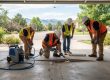
The restoration of an uneven sidewalk panel requires a systematic approach that prioritizes precision over brute force. Unlike traditional demolition, which is disruptive and loud, polyurethane injection is a surgical procedure. If you’re ready to fix trip hazard on sidewalk Centennial, the process begins with a careful assessment of the slab’s current elevation and the voids beneath it. Our technicians use specialized equipment to ensure the lift is controlled and permanent.
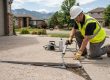
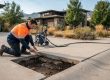
- Precision Drilling: We drill small, 5/8-inch holes through the concrete. These are about the size of a penny and are strategically placed to ensure even lifting across the entire panel without compromising its structural integrity.
- Structural Injection: A high-density, structural-grade polyurethane foam is injected through these ports. As the material enters the sub-grade, it expands to fill every hidden pocket.
- Real-Time Monitoring: We monitor the slab’s movement to within a fraction of an inch. This ensures the surface becomes perfectly flush with adjacent panels, meeting safety standards without over-lifting.
- Final Sealing: Once the slab is level, we patch the injection holes with color-matched grout. The site is then cleaned, leaving the repair nearly invisible to the naked eye.
The Injection Process Explained
The lifting action is the result of a controlled chemical reaction between two liquid components. When these parts mix, they expand rapidly, exerting enough pressure to move heavy concrete while remaining light enough to avoid over-compacting the sub-grade. As the foam travels, it seeks out the path of least resistance, filling every hidden pocket and compressing the loose Centennial soil. Slab stabilization is the secondary benefit of foam, as it creates a solid, waterproof foundation that resists future settlement. This process is far more effective than adding heavy mudjacking slurry, which often leads to secondary sinking due to its sheer weight.
Aftercare and Maintenance
One of the most significant advantages of this method is the lack of downtime. You can use your sidewalk almost immediately after a RiseLock repair, as the foam reaches its full structural strength within minutes. To ensure the longevity of the work, we recommend sealing any open joints or cracks with a high-quality silicone-based caulk. This prevents moisture from reaching the sub-grade and starting the freeze-thaw cycle again. For homeowners seeking comprehensive information on maintaining their property, our guide on Concrete Repair in Denver, Colorado provides deeper insights into structural preservation. If you’re ready to fix trip hazard on sidewalk Centennial and secure your property’s walking surfaces, you can request a professional concrete evaluation today.
Professional Trip Hazard Repair in Centennial with RiseLock
Choosing a partner to restore your property’s structural integrity requires more than finding a contractor with a pump. It requires a team that understands the specific geological challenges of the South Metro area. At RiseLock Concrete Lifting, we view every uneven slab as a priority, applying technical mastery to ensure your walkways are safe, level, and durable. If you are ready to fix trip hazard on sidewalk Centennial homeowners can rely on our methodical approach to provide a solution that respects both your time and your landscape.
Local expertise is vital when navigating the responsibilities of property ownership. In Centennial, maintaining the sidewalk adjacent to your home is a matter of both safety and compliance. While the city manages major street infrastructure, the day-to-day safety of the pedestrian path often falls to the resident. We help you meet these standards with precision, ensuring that your repair is not just a temporary patch but a long-term stabilization of the sub-grade soil.
Environmental responsibility is a core component of our service. Traditional concrete replacement is a resource-heavy process that sends tons of old material to Colorado landfills. In contrast, polyurethane concrete lifting is a low-impact alternative. The high-density foam we use is chemically inert and releases no toxins into the surrounding soil. By choosing to lift rather than replace, you reduce the carbon footprint of your home maintenance while preserving the established look of your neighborhood.
The RiseLock Concrete Lifting Advantage
Our commitment to quiet authority means we focus on results rather than flashy marketing. We specialize in modern, high-density foam solutions that offer a cleaner, faster alternative to the messy slurries used in traditional mudjacking. This precision-driven process ensures minimal disruption to your daily life. There’s no need to rope off your yard for days or worry about heavy machinery rutting your lawn. We proudly serve Centennial, Aurora, and the surrounding South Metro area, bringing specialized equipment to every job site to ensure the highest standards of structural restoration.
Next Steps for a Safer Sidewalk
Restoring your peace of mind starts with a professional assessment. When you schedule a visit, our technicians perform a thorough evaluation of your concrete’s condition, looking for the root cause of the settlement. We provide a clear, detailed quote and explain exactly how the lifting process will stabilize your specific slabs. You won’t have to guess about the timeline or the outcome. For more information on making an informed decision, our Concrete Lifting Solutions: A Buyer’s Guide offers a comprehensive look at what to expect during the restoration process. Don’t wait for a small offset to become a major liability; take the first step to fix trip hazard on sidewalk Centennial properties by contacting our team for a professional evaluation today.
Secure Your Centennial Property with Precise Concrete Restoration
Maintaining a safe and level walkway in the South Metro area is a matter of both long-term property value and immediate safety. We’ve explored how the intersection of expansive clay soils and aggressive freeze-thaw cycles creates unique structural challenges for local homeowners. While traditional methods like mudjacking or full replacement were once the only options, modern high-density polyurethane provides a cleaner, faster, and more durable alternative for our specific climate.
By choosing specialized polyurethane technology, you ensure that your repair withstands the shifting ground without the invasive mess of heavy machinery. It’s a non-invasive process that cures in minutes, allowing you to return to your daily routine without delay. When you’re ready to fix trip hazard on sidewalk Centennial, our team of local experts is here to provide the technical mastery your property deserves.
Take the first step toward a flush, worry-free sidewalk today. You can Request a Professional Concrete Assessment from RiseLock to receive a detailed evaluation from our structural restoration specialists. We look forward to helping you secure your home for many winters to come.
Frequently Asked Questions
Is fixing a sidewalk trip hazard the homeowner’s responsibility in Centennial?
In Centennial, property owners are generally responsible for maintaining the sidewalk adjacent to their home or business. While the city manages major street infrastructure, ensuring the walking surface is free of vertical offsets falls to the resident. If you need to fix trip hazard on sidewalk Centennial homeowners should act quickly to mitigate liability. Our professional assessment helps determine if your specific panels meet the 1/4-inch hazard threshold set by federal safety standards.
How much does it cost to fix an uneven sidewalk panel?
The investment for concrete leveling depends on the degree of settlement and the volume of material required to stabilize the sub-grade. While we don’t provide flat rates without a physical inspection, lifting is typically 50% to 70% more cost-effective than a full tear-out and replacement. This method avoids the additional expenses of demolition, permits, and landscaping restoration, making it a financially prudent choice for restoring your property’s structural integrity.
How long does polyurethane concrete lifting last in Colorado’s climate?
Polyurethane concrete lifting is a permanent solution engineered to endure Colorado’s harsh environmental conditions. The material is chemically inert and remains stable despite the 149 annual freeze-thaw cycles common in the South Metro area. Unlike traditional mudjacking, which uses organic materials that can shrink or erode over time, high-density foam maintains its structural integrity and volume for the life of the concrete slab it supports, providing long-term security.
Can I fix a sidewalk trip hazard myself with a grinder?
Grinding is a temporary cosmetic fix that often creates new structural problems. While it removes the vertical “lip,” it significantly thins the concrete, making the slab prone to cracking under weight or extreme temperature shifts. Furthermore, grinding does nothing to address the underlying soil voids that caused the settlement initially. Professional lifting provides a flush surface while simultaneously stabilizing the foundation to prevent the hazard from returning during the next season.
Will the polyurethane foam wash away during Centennial’s spring runoff?
High-density polyurethane is hydrophobic, meaning it is completely waterproof and will not wash away during heavy spring runoff or rapid snowmelt. This is a critical advantage over traditional soil-based slurries that can erode when exposed to moisture. The foam creates a sealed, moisture-resistant barrier beneath your sidewalk, protecting the sub-grade from the saturation and washout that typically leads to sinking panels in established Centennial neighborhoods.
What happens if a tree root is causing my sidewalk to heave?
Tree roots present a unique challenge that requires a careful evaluation of whether the concrete has heaved or settled. If a mature root system has physically lifted a panel, the root must often be trimmed or managed before the slab can be reset. However, if the slab has settled in the areas surrounding the root, we can use foam to fix trip hazard on sidewalk Centennial properties by carefully leveling the adjacent sections to create a safe transition.
How soon can I walk on my sidewalk after a polyurethane repair?
You can walk on your sidewalk almost immediately after the injection process is complete. The structural polyurethane foam reaches its full load-bearing capacity within approximately 15 minutes of being injected. This speed is a significant benefit for busy families and commercial properties that cannot afford the 24-hour to 72-hour wait times associated with traditional concrete pouring. Your daily routine remains virtually uninterrupted throughout the entire repair process.
Does RiseLock offer concrete lifting for commercial properties in Centennial?
Yes, RiseLock provides comprehensive concrete leveling and repair services for both residential and commercial clients throughout Centennial. We understand that commercial property owners face strict requirements for federal safety compliance and public liability. Our team utilizes industrial-grade equipment and materials to stabilize high-traffic areas, including retail walkways, office park paths, and multi-family housing sidewalks, ensuring long-term durability and professional results for every structural project.