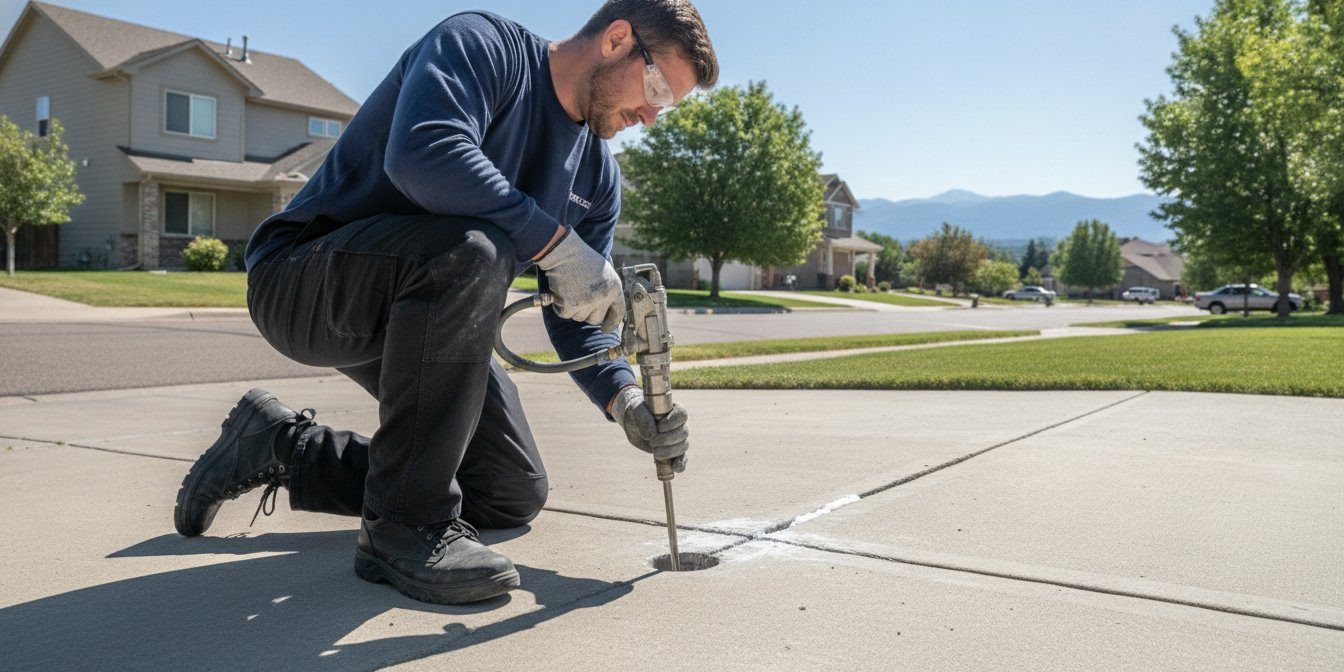
The most expensive way to fix a sunken driveway is often the one homeowners assume is their only option: full demolition and replacement. While a cracked or uneven slab looks like a total loss, the problem usually isn’t the concrete itself but the unstable soil underneath it. When you analyze the concrete leveling cost vs replacement, you’ll find that lifting the existing slab is not just a budget-friendly alternative. It is a precision-engineered restoration that addresses the root cause of the settlement.
It’s understandable to feel anxious about tripping hazards on your sidewalk or water pooling near your foundation. You need a solution that lasts without the noise and debris of a week-long construction project. You’ll discover why concrete leveling often costs 50% to 70% less than replacement while providing a more durable result by stabilizing the ground. We will examine the technical advantages of modern foam lifting, compare long-term value, and help you choose the most reliable path for your property’s structural integrity.
Key Takeaways
- Analyze the concrete leveling cost vs replacement to see how homeowners can save 50% to 70% while bypassing the hidden expenses of permits and debris removal.
- Understand the role of Colorado’s expansive bentonite clay in structural settlement and how identifying sub-surface voids prevents future sinking.
- Evaluate the time-saving benefits of polyurethane lifting, which restores surfaces for use in minutes rather than the seven-day curing period required for new concrete.
- Distinguish between slabs that are candidates for stabilization and those with severe structural shattering or surface spalling that necessitates full demolition.
- Learn why lightweight foam injection is superior to traditional mudjacking for long-term stability by minimizing the additional weight placed on vulnerable soil.
The Financial Reality: Concrete Leveling Cost vs. Replacement in 2026
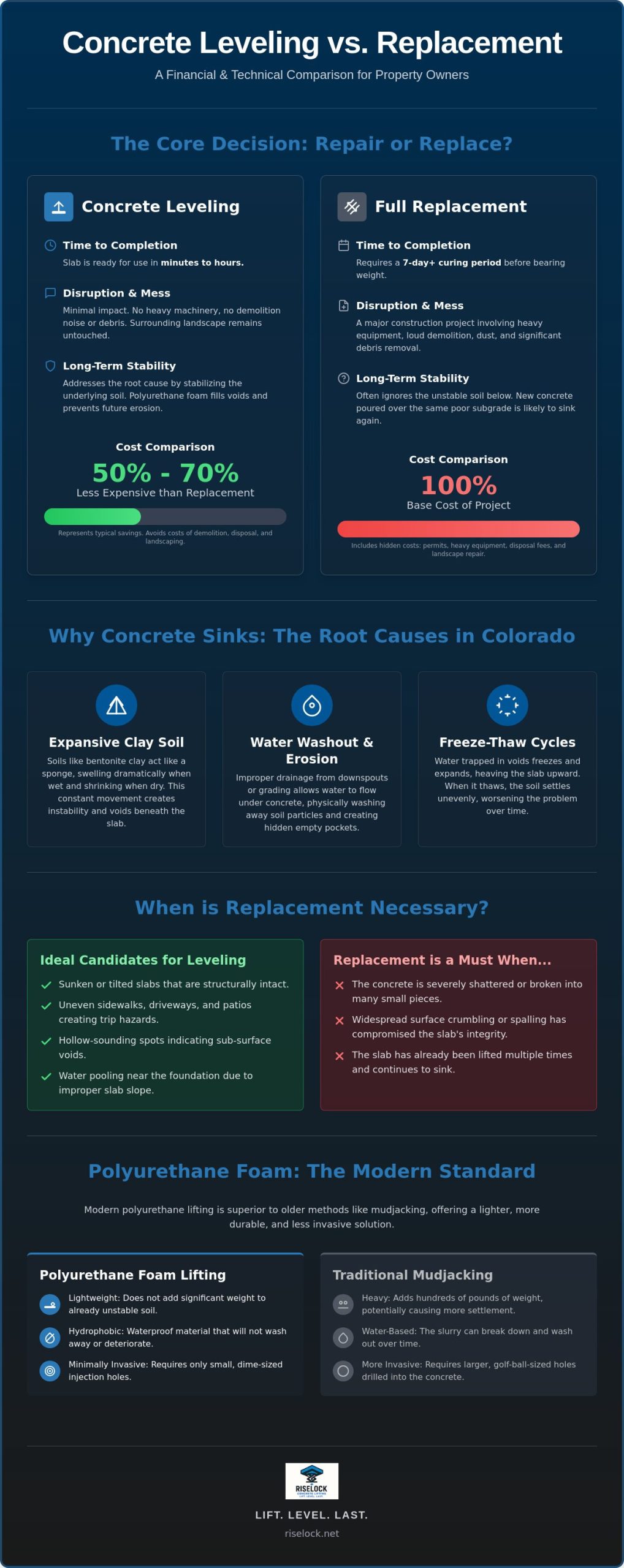
Choosing between restoration and demolition is primarily an exercise in evaluating long-term value. When you examine the concrete leveling cost vs replacement, the most immediate difference appears on the initial estimate. Professional leveling typically requires 50% to 70% less capital than a full tear-out. This disparity exists because leveling utilizes the existing structural asset rather than treating it as waste material. In 2026, the rising costs of raw concrete and the specialized labor required for demolition have only widened this gap, making stabilization the more pragmatic financial choice for most residential properties.
Beyond the direct invoice, homeowners must account for the secondary expenses that accompany a full replacement. Demolition creates a ripple effect of costs, including municipal permits, heavy equipment rental, and professional debris disposal. In many Colorado municipalities, landfill fees for concrete waste have increased significantly, adding a silent premium to every replacement project. There’s also the matter of landscaping. Heavy machinery often damages surrounding sod, irrigation lines, and flower beds, necessitating additional repairs that are rarely included in the initial masonry quote. Understanding what concrete leveling is allows you to see it as a surgical intervention that avoids these collateral expenses entirely.
Direct Cost Comparison by Project Type
Driveway restorations offer the most significant savings because of their large surface area. Replacing a multi-car driveway involves days of labor and massive material volumes, whereas polyurethane lifting can stabilize the same area in hours. For sidewalks, the benefit is found in hazard mitigation. A single offset slab can be leveled for a fraction of the cost of a city-mandated replacement. Garage floors present a unique logistical challenge; replacing them often requires removing heavy shelving or navigating around structural supports. Leveling allows for stabilization without clearing the entire space, preserving both your time and your budget.
Long-term Value and Warranty Factors
Durability is the true measure of a successful repair. While new concrete looks pristine, it remains vulnerable to the same soil settlement that caused the original failure. Polyurethane foam offers a technical advantage by filling voids with a hydrophobic, lightweight material that won’t wash away or add excessive weight to the soil. This prevents the “secondary settlement” often seen with heavier repair methods. The Total Cost of Ownership for a concrete slab represents the cumulative sum of the initial installation, periodic maintenance, and any structural stabilization required to maintain its safety and aesthetic standards over a ten-year period. By choosing stabilization, you extend the lifespan of your existing slab while addressing the underlying soil issues that a simple replacement would ignore.
Why Concrete Sinks: Understanding the Root Cause in Colorado
Concrete settlement is rarely a failure of the material itself. Instead, it’s a reflection of the unstable ground supporting the weight of the slab. In regions like Denver and Colorado Springs, the prevalence of expansive bentonite clay creates a unique set of structural challenges. This specific type of soil acts like a sponge; it expands significantly when saturated with water and shrinks as it dries out. This constant movement creates a cycle of instability that eventually leaves the concrete without a solid base to rest upon.
Washout is another critical factor that homeowners often overlook. When rainwater or snowmelt isn’t properly diverted through gutters and downspouts, it physically removes soil particles from beneath the concrete. This process creates invisible voids. While the surface may look solid for a time, the slab is essentially bridging over an empty pocket. Eventually, the weight of the concrete or the pressure of a vehicle causes the slab to snap and sink into the hole. Replacing a slab without addressing these sub-surface conditions is a temporary fix at a premium price. When evaluating concrete leveling cost vs replacement, it’s essential to recognize that new concrete poured over existing voids will eventually follow the same downward path as its predecessor.
The freeze-thaw cycles characteristic of the Front Range exacerbate these issues. Water trapped in sub-surface voids expands as it freezes, heaving the concrete upward. When it melts, the soil settles further, often in a more compacted or eroded state. This repeated stress weakens the bond of the concrete and accelerates the formation of trip hazards. A technical assessment from a specialist in foam concrete lifting can identify these invisible risks before they become structural emergencies.
The Mechanics of Concrete Settlement
A void is essentially an air pocket where soil has either shrunk or washed away. These gaps compromise structural integrity by removing the uniform support a slab requires. It’s important to distinguish between surface cracking, which might be cosmetic, and structural sinking, which indicates a sub-grade failure. For a deeper look at these distinctions, you can review our guide on Concrete Repair in Denver, Colorado to understand how restoration differs from a simple patch job.
Colorado’s Unique Geological Challenges
Denver homeowners face a disproportionate amount of slab settlement compared to other parts of the country due to our semi-arid climate and soil composition. Poor drainage around foundations accelerates this by concentrating moisture in specific areas, leading to localized “hot spots” of soil expansion. High-density polyurethane foam is the modern standard for these conditions because it’s hydrophobic and maintains its structural integrity regardless of soil temperature fluctuations. This ensures that the repair remains stable through the extreme seasonal shifts common in the Rocky Mountain region.
Beyond the Invoice: Evaluating Time, Disruption, and Longevity
The true impact of a home improvement project isn’t always found on the bottom line. When homeowners weigh the concrete leveling cost vs replacement, they must also account for the logistical burden of each method. Replacing a concrete slab is a multi-day ordeal that involves jackhammers, heavy machinery, and the persistent fine dust that accompanies demolition. In contrast, stabilization is a surgical process that restores your property’s function with minimal interference to your daily routine or your neighbors’ peace.
Environmental responsibility has become a central pillar of modern property management. Tearing out a driveway or patio generates tons of debris that eventually populates local landfills. By choosing restoration, you’re effectively recycling your existing concrete in place. This ethical choice reduces the carbon footprint associated with manufacturing and transporting new cement, which is one of the most resource-intensive materials in the construction industry. Maintaining a quiet neighborhood while achieving structural stability is a hallmark of the modern restoration approach.
The “Invisible” Repair Process
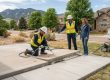
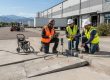
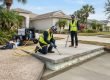
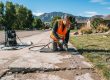
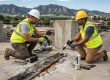
Modern residential concrete leveling utilizes a sophisticated injection method that requires only penny-sized holes. These small entry points are drilled strategically across the settled slab to allow for precise foam distribution. This method is highly preferred for HOA compliance because it avoids the unsightly “patchwork” appearance of replaced sections and doesn’t require large staging areas for raw materials. Once the high-density foam is injected, it expands in seconds, filling every sub-surface void and exerting enough upward pressure to lift even the heaviest residential slabs back to their original grade.
Comparing Curing and Load Times
Curing time is perhaps the most significant functional difference between these two paths. New concrete is “green” and vulnerable for several days; driving a vehicle on it too early can lead to immediate structural cracking and surface damage. Most replacement projects require a full seven-day wait before they can support the weight of a standard SUV. Polyurethane foam reaches 90% of its load-bearing capacity in approximately 15 minutes. This immediate stabilization means you can use your driveway or sidewalk almost the moment the technician finishes the job. Rapid turnaround is vital for commercial properties to eliminate liability risks and restore pedestrian access without prolonged closures. This speed ensures that your property remains safe and accessible without the week-long headache of a restricted construction zone.
The Tipping Point: When Replacement is Actually Necessary
Determining the threshold for repair requires a technical evaluation of the concrete’s current state. While restoration is often the superior choice, there are specific scenarios where the material has degraded beyond the reach of stabilization. When calculating the concrete leveling cost vs replacement, homeowners must identify the point where restoration no longer provides a reliable return on investment. If more than 60% of a slab is severely compromised by deep, intersecting cracks or structural fragmentation, the cost-benefit ratio begins to favor a complete tear-out and repour.
Surface condition is another deciding factor. Concrete leveling addresses the position of the slab, not the quality of its finish. If your driveway or patio suffers from extensive spalling, where the top layer of concrete is flaking away due to salt damage or poor finishing, lifting the slab won’t fix the aesthetic failure. In these cases, the slab might be level, but it will remain a cosmetic liability. Precision restoration works best on slabs that are structurally sound but simply out of position due to soil movement.
Structural Red Flags
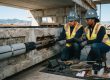
In many modern Colorado residential developments, slabs are reinforced with high-tension steel cables. Settlement in these environments can be particularly dangerous. If you notice rusted cable ends protruding from the edge of your slab or hear a loud “pop” accompanied by a new, deep fracture, you may be looking at a failed post tension installation. These cables provide the necessary compression to keep the slab together; once they snap, the slab loses its structural bond. Additionally, if the concrete is “heaving” (rising) rather than sinking, the problem is likely an aggressive root system or extreme soil expansion that requires removal rather than lifting.
The “Good Candidate” Checklist
A successful lift depends on the slab’s ability to move as a single unit. We verify slab thickness and reinforcement type during every inspection to ensure the concrete can withstand the pressure of the expansion process. Sub-grade stability is equally vital. If the soil beneath the slab is still actively eroding or consists of uncompacted organic debris, even the best foam injection will only be a temporary fix. For homeowners dealing with sunken parking surfaces, combining structural repair with concrete garage floor leveling can restore the entire transition from the driveway to the interior of the home. If you are unsure if your slab has reached this tipping point, you can schedule a professional evaluation for foam concrete lifting to determine the most ethical and durable path forward.
Polyurethane Lifting: The Modern Standard for Denver Property Owners
The evolution of structural restoration has moved away from the heavy, intrusive methods of the past. When evaluating the concrete leveling cost vs replacement, it’s vital to consider the material used for the repair. RiseLock Concrete Lifting exclusively utilizes high-density polyurethane foam for all leveling projects because it offers a level of precision and durability that traditional mudjacking cannot match. While mudjacking relies on a heavy slurry of sand, soil, and cement, our foam solution provides a lightweight alternative that solves the problem without overstretching the soil’s load-bearing capacity.
Weight is a critical factor in long-term slab stability. Mudjacking adds hundreds, or even thousands, of pounds of additional weight to the ground. This often leads to secondary settlement, where the soil collapses under the combined weight of the concrete and the heavy repair material. Polyurethane foam is approximately 95% lighter than traditional grout. This ensures that the repair doesn’t become the cause of future sinking, providing a permanent solution for properties built on Colorado’s challenging expansive clays.
Precision control allows our technicians to achieve millimeter-accurate lifts. Unlike the unpredictable pressure of a mudjacking pump, the expansion of polyurethane is consistent and manageable. This is particularly important for sensitive structures where over-lifting by even a fraction of an inch could cause cosmetic damage to siding or door frames. Additionally, the foam’s hydrophobic properties mean it is completely waterproof. It won’t wash away during heavy spring rains or snowmelt, effectively sealing the underside of the slab against future washout cycles.
Precision and Technical Mastery
High-density foam expands to fill even the most microscopic voids that traditional grout mixes simply cannot reach. Our approach to structural stabilization in Boulder and Aurora focuses on creating a uniform support base that eliminates the air pockets responsible for slab movement. The lifting force is generated by a controlled exothermic reaction between two liquid components that, upon mixing, expand into a high-density structural foam capable of supporting several thousand pounds per square foot. This chemical precision ensures that every square inch of the slab is supported, not just the areas near the injection holes.
Your Next Steps for Concrete Restoration
Restoring your property starts with a professional site assessment to determine the depth of the sub-surface voids and the structural integrity of your concrete. During a concrete leveling service visit, our team identifies the precise injection points needed to return your surfaces to their original grade. We handle the technical complexities of soil stabilization so you can avoid the high costs and logistical headaches of full demolition. Contact RiseLock Concrete Lifting for a precision concrete assessment in Denver to secure your property’s foundation with the modern industry standard.
Securing Your Property’s Structural Future
Choosing a restoration path requires balancing immediate functional needs with long-term financial health. Throughout this guide, we have analyzed how precision intervention preserves the structural integrity of your slabs while avoiding the logistical burdens of traditional demolition. When you calculate the concrete leveling cost vs replacement, it’s clear that stabilizing the underlying soil offers a more comprehensive solution than simply pouring new material over existing voids. This modern approach ensures your property remains safe and visually consistent without the disruption of heavy machinery.
As Denver’s experts in polyurethane lifting, RiseLock Concrete Lifting delivers precision-engineered structural stabilization that prioritizes the health of your property. Our eco-friendly, long-lasting foam solutions provide a permanent barrier against washout and settlement, protecting your investment for the years ahead. You don’t have to manage the anxiety of tripping hazards or the stress of invasive construction projects. Request Your Free Concrete Leveling Estimate today and partner with a team dedicated to high-precision structural restoration.
Frequently Asked Questions
Is concrete leveling cheaper than replacement in 2026?
Concrete leveling is significantly more cost-effective than replacement because it bypasses the labor-intensive demolition process. Homeowners typically see a 50% to 70% reduction in their total project invoice compared to the expenses of a full repour. This savings is primarily driven by the elimination of debris disposal fees, municipal permit costs, and the need for new raw materials. It’s a surgical approach that utilizes your existing assets rather than treating them as waste.
How much does concrete leveling cost per square foot?
The industry average for concrete leveling varies based on the method chosen and the extent of the sub-surface voids. While traditional methods might appear less expensive initially, modern polyurethane injection provides a more durable result that prevents secondary settlement. When you analyze the concrete leveling cost vs replacement, the per-square-foot investment for stabilization is consistently lower than the cost of a full structural rebuild and the associated landscaping repairs.
How long does polyurethane concrete leveling last compared to new concrete?
Polyurethane restoration typically provides a service life of 5 to 15 years, depending on the surrounding environmental conditions. Unlike new concrete, which is still vulnerable to the same soil erosion that caused the original failure, polyurethane foam is hydrophobic and won’t wash away. It maintains its structural integrity and volume indefinitely. This provides a stable foundation that resists the Front Range’s harsh seasonal shifts better than untreated soil beneath a new slab.
Can you lift concrete that is already cracked?
You can successfully lift cracked concrete as long as the slab maintains its structural bond. If the concrete is shattered into many small, disconnected fragments, it may require replacement. However, most common settlement cracks don’t prevent a successful lift. Our technicians use precise injection patterns to ensure the entire slab rises uniformly, often closing the gaps in existing cracks as the material expands and provides upward pressure.
Will concrete leveling fix the reason why my slab sank in the first place?
Yes, the process addresses the underlying soil voids that cause sinking. While replacement simply puts new weight on the same unstable ground, leveling involves injecting high-density foam into the empty pockets beneath the slab. This fills the voids, compacts the loose soil, and creates a stable, lightweight base. It treats the root cause of the settlement by replacing air and water pockets with a permanent structural material.
What is the difference between mudjacking and polyurethane foam lifting?
The primary differences involve weight and the size of the injection sites. Mudjacking uses a heavy mixture of sand and cement that can actually cause further soil settlement due to its extreme mass. It also requires large, 1 to 2-inch holes that are difficult to patch discreetly. Polyurethane foam is lightweight and requires only penny-sized holes. This makes it a cleaner, more precise, and more durable solution for modern property owners who value long-term stability.
How soon can I drive on my driveway after it has been leveled?
You can typically drive on a leveled surface within 15 to 30 minutes of the project’s completion. High-density polyurethane reaches its full load-bearing capacity almost instantly after the chemical reaction finishes. This is a significant advantage over full replacement, which often requires a seven-day curing period before the concrete is strong enough to support the weight of a standard vehicle without cracking.
Does concrete leveling work on Colorado’s expansive clay soils?
Polyurethane lifting is particularly effective for Colorado’s expansive clay soils because it doesn’t add unnecessary weight to the ground. Expansive bentonite clay reacts poorly to the heavy pressure of traditional mudjacking or the mass of a new, thick slab. The lightweight nature of structural foam allows it to stabilize the area without triggering the heave and sink cycles common in the Denver and Colorado Springs regions.