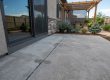
A cracked patio doesn’t automatically need replacement. If it remains in a few large, sound pieces, lifting may restore its level; a slab that has crumbled into fragments is generally better replaced. Knowing how to fix sunken concrete without replacing it in Denver starts with assessing the slab and the support beneath it.
A crack doesn’t necessarily mean the concrete is beyond repair. In Denver, shifting soil and repeated freeze-thaw cycles can weaken support beneath a patio, so surface damage is only part of the assessment. The right repair depends on whether the concrete can be lifted safely and remain supported.
This guide covers common causes of sinking, how leveling compares with replacement, and what affects the choice between them. You’ll also learn what to expect during patio leveling and when the surface can typically be used again, helping you choose a practical next step.
Key Takeaways
- A patio with a few large, sound sections may be a candidate for lifting, while concrete broken into many fragments is often better replaced.
- Denver’s soil movement and freeze-thaw cycles can undermine patio support; addressing the cause of settling matters for a lasting repair.
- Leveling is typically less costly than replacement, and a polyurethane-foam-leveled patio can generally be used the same day the work is completed.
- Compare repair methods by slab condition, support needs, and how water affects the site to understand which option fits the patio.
How much does patio leveling cost compared to replacement?
Leveling raises an existing slab that remains usable; replacement removes damaged concrete and pours a new patio. The right option depends on the slab’s condition and whether the soil beneath it can support the repair.
Permit and building-code requirements depend on the project and jurisdiction. Concrete lifting alone does not establish a universal Denver or Colorado permit rule, so requirements depend on the work’s scope.
Concrete Lifting Costs
Concrete lifting raises existing sections by filling voids beneath them, making it a different scope from demolition and replacement. It can cost less because sound concrete stays in place. Pricing depends on the case and is provided after a quote request; slab area, access, lift depth, and soil work affect the scope. Backfilled soil beneath patios may continue settling for over a decade, so the cause matters too.
Polyurethane Foam Injection
Polyurethane foam injection lifts a suitable slab and supports it beneath the surface. Compared with replacement, it avoids removing sound sections; compared with other lifting methods, its suitability depends on the slab and the support required. Foam cures within minutes, and it resists water without washing out like soil. Water sources still matter: unresolved water problems can contribute to repeat settling.
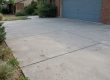
Cracks don’t automatically rule out lifting. A patio in a few large, sound pieces may be raised, while concrete that is crumbled, broken into small fragments, or too thin to lift is generally better replaced. Lifting may not prevent further movement if soil continues settling or water keeps weakening the support.
Before recommending a method, a reputable Denver contractor should assess the slab’s condition, identify the support issue, and explain why lifting or replacement fits. Ask for a clear scope and cost factors. A small drop addressed early may require less leveling work than a problem left for two years.
| Option | Best fit | Cost and repair scope | Key limitation |
|---|---|---|---|
| Lift existing slab | Large, sound sections | Raises concrete without full replacement | Underlying causes can lead to settling again |
| Replace patio | Fragmented, crumbled, or thin concrete | Removes damaged slab and installs new concrete | Requires demolition and a new pour |
Choose lifting when the slab remains sound; choose replacement when its condition prevents a stable lift.
Causes of sinking and damaged concrete
Denver patios can move because the ground beneath them changes. The Colorado Geological Survey maps expansive and collapsible soils that contribute to settling around Denver. Expansive soil changes volume as moisture levels shift, which can alter support below a slab. Collapsible soil can compress when conditions change, leaving sections without even support. Both processes can create uneven edges, gaps, or cracks across a patio.
Colorado’s freeze-thaw cycles add another source of movement. Temperatures can cross the freezing point dozens of times in a season. Water in soil freezes, expands, and then thaws, changing the support beneath concrete. A patio may settle unevenly if one area stays wetter or drains differently. For example, a low corner beside a downspout may move more than the patio’s drier edge.
Water management is a key part of diagnosing repeat movement. Runoff from roofs, poorly directed downspouts, or persistent irrigation can saturate soil near a slab. Water can also carry fine soil away through existing gaps, leaving voids. A professional assessment considers drainage patterns, low spots, cracks, and the direction of slab movement together, rather than treating one visible crack as the whole problem.
Construction conditions matter, too. If fill beneath a patio was not compacted consistently, weaker areas can compress under the slab’s weight. A crack across a panel may indicate a different issue from an intact corner that has dropped. RiseLock assesses the concrete and its underlying support before choosing a repair approach. The pattern helps distinguish movement beneath the slab from damage within the concrete.
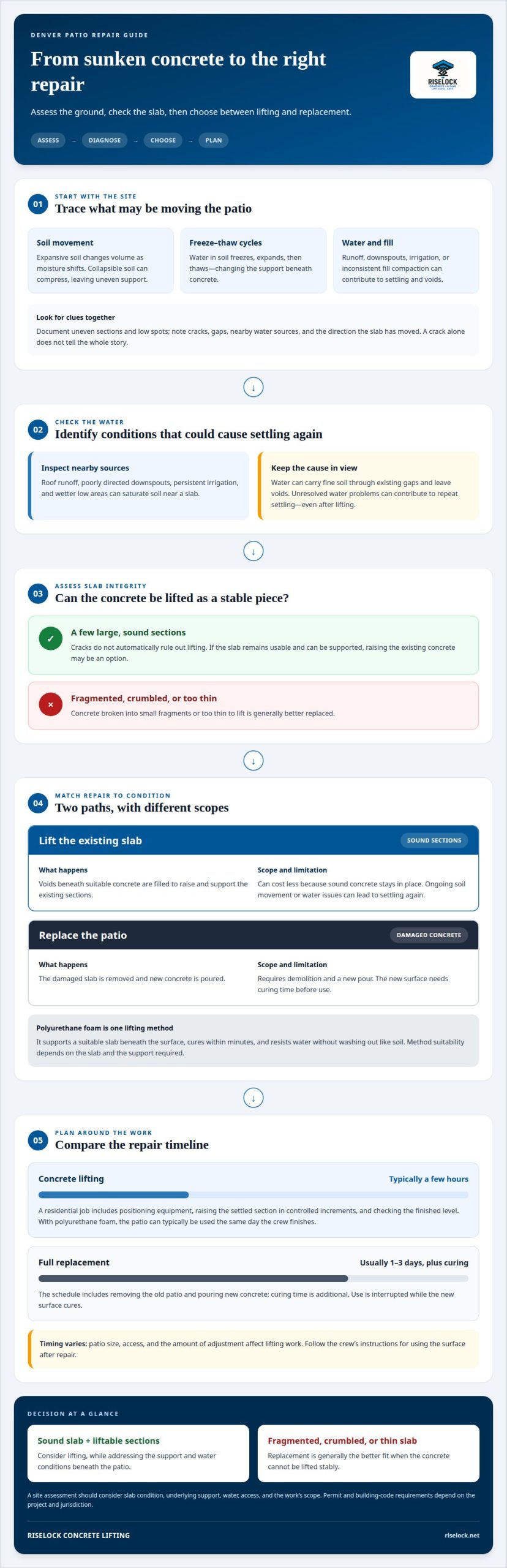
For a Denver patio, a useful assessment follows three steps: document uneven sections, identify nearby water sources, and evaluate whether the concrete remains sound. That process connects the visible damage to its likely cause. A site-specific soil and slab assessment can help clarify whether uneven support, moisture, or soil movement is driving the problem.
Repair timelines and same-day use
In Denver, concrete lifting typically takes a few hours, and a raised section is typically usable the same day. Replacement takes longer because the old patio must be removed and new concrete poured.
A typical residential patio leveling job takes a few hours. The work includes positioning lifting equipment, raising the settled section in controlled increments, and checking the finished level. Patio size, access, and the amount of adjustment affect the work sequence. A larger or harder-to-reach area may require more time than a straightforward section.
With polyurethane foam, the patio can typically be used the same day the crew finishes. The foam hardens within minutes, so the lifting process does not require waiting through a long curing period. Same-day usability can be helpful when a patio connects to a frequently used entrance. Follow the crew’s instructions for using the surface after the work.
Full concrete replacement in the Denver metro usually takes 1 to 3 days, plus curing time. That schedule covers the replacement work, not the additional time concrete needs to cure. A homeowner planning around a patio gathering should account for both stages. Unlike lifting, replacement interrupts use while the existing slab is removed and the new surface cures.
Before work begins, the crew assesses the patio layout and the access needed for equipment. They determine whether the job involves one settled section or several connected areas. These details shape the work sequence and how much of the patio is unavailable during repairs. Clear access to the work area helps the crew proceed efficiently.
Plan around the difference between completing the repair and resuming use. A lifted section is typically usable the same day, while replacement adds curing time after its 1-to-3-day work period. The method, patio condition, and work scope determine the practical schedule for each project.
Mudjacking vs Polyurethane: Cost, Durability, Suitability
Mudjacking and polyurethane injection both lift settled concrete by filling space beneath a slab. Mudjacking pumps a cement-based slurry underneath, while polyurethane injection uses expanding foam. Either method requires a slab sound enough to raise. A cracked patio needs assessment before choosing a technique.
Costs vary with the method, slab size, access, lift depth, and the support needed beneath the concrete. The price depends on the case and is given after a quote request, with those project factors shaping the scope. Without a verified local price comparison, the practical distinction is the material and process, not a fixed cost advantage.
The waterproof foam won’t wash out or break down over time, helping it maintain support beneath the slab. However, it does not fix a leaking downspout or another source of excess water. Water that continues to affect the soil can contribute to renewed settling, so a lasting repair plan considers drainage as well as the lifting method.
Mudjacking uses a heavier slurry, while polyurethane lifting places foam beneath the slab. The suitability of either method depends on the concrete’s condition and the void being filled. A patio with a few large, intact sections presents a different repair problem from one broken into fragments. An assessment connects the material choice to the slab and site conditions.
Compare the methods by asking what support the slab needs, how water affects the area, and whether the concrete can be lifted intact. If water is contributing to movement, correcting that source matters with either approach. For a patio assessment focused on the method and underlying support, request a concrete lifting evaluation.
RiseLock Concrete Lifting
RiseLock Concrete Lifting assesses sunken concrete and determines whether lifting or repair suits the slab. The decision starts with the concrete’s condition, the extent of settlement, and the support beneath it. If the patio is suitable for lifting, polyurethane concrete leveling can raise uneven sections without replacing the entire surface. When the damage calls for another approach, concrete repair may be a better fit.
For homeowners considering how to fix sunken concrete without replacing a patio in Denver, an assessment can clarify the next step. RiseLock provides polyurethane concrete lifting, leveling, and repair, matching the work to the slab rather than assuming every surface needs the same solution.
Contact RiseLock Concrete Lifting to discuss your sunken concrete.
Choose a Clear Next Step for Your Patio
The next step is to turn the visible problem into a repair decision grounded in the patio’s condition. Before planning other outdoor work, consider how uneven concrete affects access, drainage, and the way you use the space. A focused assessment can help establish which sections need attention and whether preserving the existing slab is practical.
If you’re considering how to fix sunken concrete without replacing your patio in Denver, focus on the slab and its support, not appearance alone. A useful repair plan explains the proposed work and how it addresses the conditions beneath the concrete. That gives you a clear basis for deciding how to proceed.
Discuss your patio with RiseLock Concrete Lifting to consider an appropriate next step. With a clearer understanding of the repair options, you can make a considered choice and plan your outdoor space with confidence.
Frequently Asked Questions
Can a patio that has cracked still be lifted?
A cracked patio can be lifted if its sections remain structurally sound. One crack across a broad panel differs from concrete split into loose pieces. For example, adjoining patio sections may sit at different heights while retaining their shape. An assessment can determine whether raising them will preserve usable concrete or whether another repair approach is needed.
How can a concrete leveling professional determine which option is right for your property?
A concrete leveling professional assesses slab integrity, changes in elevation, equipment access, and support beneath the surface. A patio beside a garage threshold, for example, needs a safe transition between surfaces, not just a level center. RiseLock Concrete Lifting serves Denver, Aurora, Centennial, Parker, Colorado Springs, Englewood, Littleton, Lakewood, Arvada, Thornton, Wheatridge, Castle Rock, Castle Pines, and Boulder.
How long does a lifted slab typically last?
How long a lifted slab remains stable depends on the concrete’s condition and whether the cause of movement continues. A sound patio with stable support differs from a slab over soil affected by ongoing water movement. The lifting material matters, too. The lifting material can resist water, but addressing water sources may help reduce the risk of future settling.
Is concrete lifting messy or disruptive?
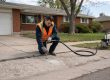
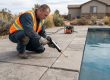
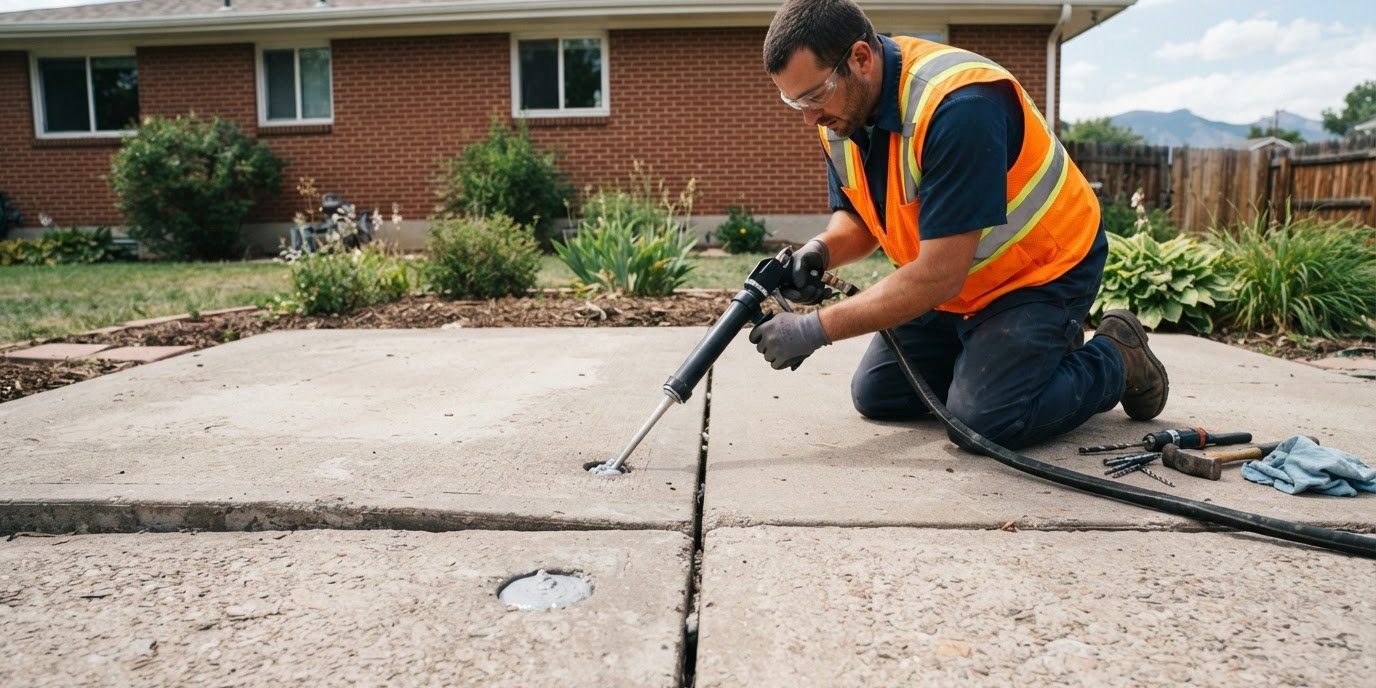
Concrete lifting avoids tearing out the existing patio, reducing the demolition and debris associated with replacement. The crew drills small holes in the slab, injects expanding polyurethane foam, and lets it harden beneath the concrete. A patio with tight access or nearby entrances still needs a planned work area during repairs.
Is it worth lifting a patio that has only dropped a little?
Even a small drop can matter if it creates an uneven transition at a doorway or disrupts the connection between a patio and walkway. The decision depends on whether the slab is sound and whether lifting can restore a useful surface. For instance, a minor height difference near a frequently used entrance may merit assessment sooner than an isolated dip away from traffic.
Will the patio sink again?
A patio can settle again if the conditions affecting its support continue. Water that keeps saturating nearby soil, for example, can contribute to renewed movement even after the concrete is raised. Polyurethane foam won’t wash out or break down over time, but it cannot prevent every site condition from changing. An assessment should consider both slab support and water patterns.