
Post-tension tendon repair in Wheat Ridge begins by locating and assessing the damaged cable, then selecting a repair for the tendon and surrounding concrete. The right post tension tendon repair specifications in Wheat Ridge depend on inspection findings, including corrosion, broken strands, voids, and anchorage condition. The damage’s extent and accessibility shape the repair scope and long-term cost.
A crack or spalled area may signal a problem hidden inside the slab. Careful assessment matters because surface repair alone may not address tendon damage or the moisture that contributed to it.
This guide explains how post-tension cable repair works, how hidden damage and corrosion are evaluated, and which project factors affect repair and life-cycle costs. It also covers maintenance choices that help protect a structure over time and how specialized concrete repair can fit into the next step.
Key Takeaways
- Repair may involve sealing the duct and injecting grout to address voids, with the approach guided by the tendon’s condition.
- Ground-penetrating radar, ultrasonic testing, and cable-break detection can help locate hidden damage before repair work begins.
- Moisture intrusion can contribute to tendon corrosion, so protecting membranes, sealants, and flashing supports long-term durability.
- Repair scope and life-cycle costs depend on the damage, access, and ongoing maintenance needs, not just the visible concrete surface.
What Is Post-Tension Cable Repair?
Post-tension cable repair restores a tendon’s function and protective system after damage, corrosion, or grout defects. In a slab, steel tendons carry force through ducts and anchorages; repair must address the affected component, not just cover a surface crack. The PTI/ICRI document DC80.3-12 is cited as a guide for evaluating and repairing unbonded post-tensioned concrete structures.
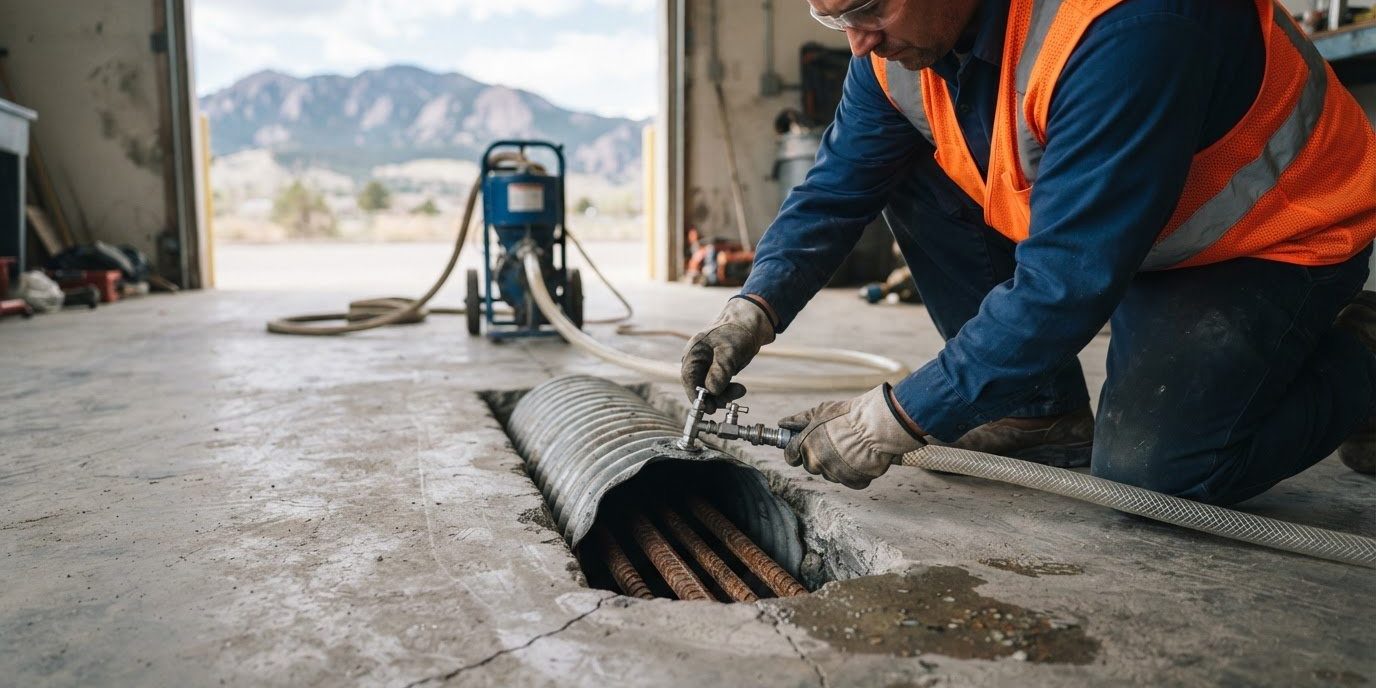
Grout injection fills accessible voids in a duct, while duct sealing limits pathways for moisture. Before injection, the repair team assesses grout condition and duct continuity. Grout samples can be tested for chlorides and voids to inform corrosion prevention. The findings help determine whether injection can restore protection or whether damaged tendon components need a separate repair plan.
The process involves reviewing the slab and available records, locating the tendon, carefully exposing the affected area, assessing the strand and anchorage, completing the specified repair, and restoring concrete protection. Locate post-tension cables before drilling or cutting. If an anchorage is compromised, the repair may require locking it off, providing shoring, and rebuilding it.
For broken, corroded, or stressed tendons, specifications should identify the affected tendon, anchorage condition, repair materials, and how duct protection will be restored. Grout and duct-sealing materials address voids and moisture pathways, but do not repair a broken strand by themselves. The method depends on the observed damage and the tendon’s structural role.
In Colorado, look for a contractor with post-tension repair experience and structural-engineering involvement. Licensing requirements depend on the work’s scope and jurisdiction, so specifications should identify the responsible design and construction roles.
For post tension tendon repair specifications in Wheat Ridge, clear documentation connects inspection findings to the repair scope. Record the damage location, grout and chloride findings, selected repair method, and how the duct and concrete will be restored. This distinguishes tendon repair from cosmetic patching and supports consistent review of the completed work.
Hidden tendon damage and nondestructive inspection
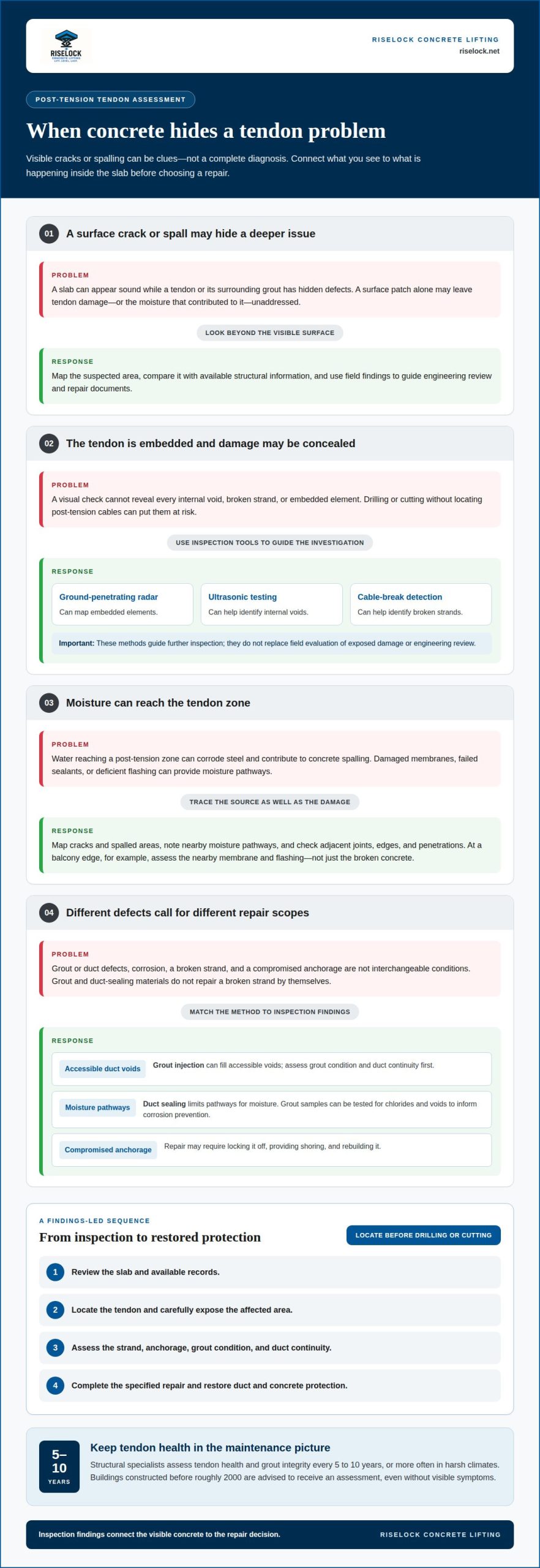
A slab can appear sound while a tendon or its surrounding grout has hidden defects. Ground-penetrating radar can map embedded elements, while ultrasonic testing and cable-break detection can help identify internal voids or broken strands. These methods guide further inspection but do not replace field evaluation of exposed damage or engineering review.
Assessment links design, inspection, construction, and maintenance. Inspectors locate and map suspected defects, then compare findings with available structural information. A field investigation helps engineers define repair documents and construction steps. The Federal Highway Administration’s Post-Tensioning Tendon Installation and Grouting Manual, Version 2.0, covers materials, post-tensioning systems, construction practices, and grouting for bridge tendons. It serves as a reference for people involved in bridge design, inspection, construction, and maintenance.
For Wheat Ridge slab repairs, project documents should identify the governing adopted building code and applicable engineering criteria. PTI/ICRI document DC80.3-12 is cited as a guide for evaluating and repairing unbonded post-tensioned concrete structures. The research also describes PTI/ACI practices for post-tension and concrete-repair work; these references don’t establish which local provisions apply to a particular project.
Inspection, permit review, and engineer approval follow the local authority’s process and the repair scope. Field findings, structural review, and repair documents provide information for that review. For an address in Wheat Ridge, identify the City of Wheat Ridge or Jefferson County as the relevant local government when determining the applicable building-permit resource.
Florida’s milestone-inspection rules are separate from Wheat Ridge requirements. Covered condominium buildings three stories or taller receive an initial milestone inspection at 30 years, or 25 years near the coast, with inspections every 10 years thereafter. Miami-Dade and Broward’s 40-year recertification runs alongside that inspection. These Florida schedules don’t set Colorado requirements.
For ongoing diagnostics, structural specialists assess tendon health and grout integrity every 5 to 10 years, or more often in harsh climates. Buildings constructed before roughly 2000 are advised to receive an assessment, even without visible symptoms. A focused inspection plan connects each finding to a repair decision and maintenance record. For related structural work, explore post-tension and concrete repair options.
Moisture intrusion and tendon corrosion
Moisture that reaches a post-tension zone can corrode the steel tendon inside the concrete. Corrosion can cause concrete to spall, so a surface patch alone may leave the underlying problem untouched. A durable repair plan traces moisture pathways and assesses the steel and surrounding concrete before work is selected.
Decks and balconies are common areas to examine. Damaged membranes, failed sealants, or deficient flashing can let water reach concrete around tendon routes. Inspection should connect visible deterioration with nearby joints, edges, and penetrations. For example, spalling near a balcony edge calls for checking the adjacent membrane and flashing, not just patching the broken concrete.
A practical assessment proceeds in stages. First, map the spalled or cracked area and note nearby moisture pathways. Next, examine exposed concrete and the tendon zone for corrosion. Then assess the deterioration and whether the protective duct or grout also needs attention. Grout sampling can test for chlorides and voids to support corrosion prevention, adding evidence beyond the visible surface.
Repair choices depend on the assessment. If moisture is still entering, restoring concrete without addressing the membrane, sealant, or flashing leaves the pathway open. If corrosion has damaged tendon components, the scope must account for the tendon and anchorage, not just the surrounding slab. The observed condition, rather than a standard patch detail, determines the work.
For ongoing upkeep, maintain deck and balcony membranes, sealants, and flashing to help limit moisture intrusion around post-tension zones. Include these elements in routine building maintenance, and record recurring leaks or deteriorated joints by location. In Wheat Ridge, connecting a leak history with nearby concrete distress gives an inspection a useful starting point and helps distinguish moisture control from damage that needs structural repair.
Post-tension repair budgeting and life-cycle costs
A useful repair budget separates investigation, structural repair, concrete restoration, and future maintenance. The scope depends on the number and condition of affected tendons, slab access, anchorage damage, and work needed to restore surrounding concrete. A localized defect and widespread deterioration call for different plans, so the visible patch size alone does not define the project.
Tendon repair, slab stabilization, and replacement address different conditions. Tendon repair targets a damaged cable or anchorage; stabilization addresses slab movement or loss of support. Replacement may be considered when a structural assessment finds damage too extensive for localized repairs. The concrete and tendon condition, along with the repair’s structural purpose, guides the comparison.
Repair pricing depends on the specific case and is provided after a quote request. Key cost factors include inspection findings, repair extent, access, shoring needs, materials, and required concrete restoration. A clear scope separates essential structural work from related surface restoration, making it easier to understand what the project addresses and why.
Life-cycle planning matters because properly protected post-tension cables are designed to last the building’s service life. One upkeep budgeting guideline allocates 2-4% of building value annually for ongoing maintenance. That budget covers broader building upkeep, not a tendon-repair price, and should account for recurring inspection and moisture-control needs.
For a practical comparison, consider assessment findings, repair scope, and maintenance needs together. First, record the affected area and observed tendon condition. Next, distinguish localized tendon work from slab-wide stabilization or replacement. Then include concrete restoration and ongoing upkeep in the life-cycle plan. This connects the immediate repair decision to future building costs.
Use a repair-scope review to connect inspection findings with a durable maintenance plan.
RiseLock Concrete Lifting: Post Tension Installation
RiseLock Concrete Lifting can help when an assessment points to post-tension installation or concrete repair needs. Clear inspection findings help define whether the concern involves the tendon system, surrounding concrete, or a separate slab-level issue. This distinction keeps the next step focused on the actual condition.
Post Tension Installation and Concrete Repair address structural project needs. Concrete Leveling and Polyurethane Concrete Lifting are suited to uneven concrete rather than tendon damage. Matching the work to the observed condition helps avoid treating a surface symptom as tendon damage.
If you’re ready to discuss the findings and next steps, contact RiseLock Concrete Lifting.
Make the Next Repair Decision With Clarity
The next step is to turn inspection findings into a clear, durable plan. For post-tension tendon repair specifications in Wheat Ridge, connect the documented condition to defined repair work, concrete restoration, and future maintenance. A useful project record also makes later inspections easier to compare by showing what was repaired and where.
Before work begins, align the repair scope with the structural assessment and the building’s ongoing maintenance priorities. This keeps decisions focused on the condition at hand rather than a surface symptom alone. A measured approach supports sound planning for owners managing repair needs over time.
RiseLock Concrete Lifting can help with the next step for a post-tension or concrete project. Discuss your repair needs with RiseLock Concrete Lifting and move forward with a clear, considered plan.
Frequently Asked Questions
What are the post-tension tendon repair specifications for Wheat Ridge, Colorado?
Repair specifications for Wheat Ridge should identify the tendon system, observed defect, and engineered repair scope. PTI/ICRI document DC80.3-12 guides evaluation and repair of unbonded post-tensioned concrete structures, but project documents must address the specific slab. They should describe how the damaged tendon, anchorage, and surrounding concrete will be handled, alongside applicable local requirements. This ties the repair plan to documented conditions.
How much does post-tension tendon repair cost in Wheat Ridge, and what affects the price?
Repair cost depends on the specific case and is provided after a quote request. Key factors include inspection findings, the number and condition of affected tendons, access, shoring, anchorage work, materials, and concrete restoration. These considerations also apply in nearby Denver, Aurora, Centennial, Parker, Colorado Springs, Englewood, Littleton, Lakewood, Arvada, Thornton, Castle Rock, Castle Pines, and Boulder. Visible damage alone does not establish the full repair scope.
What safety risks and precautions apply when cutting or repairing a tensioned tendon?
A tendon under tension can create a serious hazard if cut or disturbed without a planned repair procedure. Locate cables before drilling or cutting, and keep work within the identified repair area. If an anchorage is compromised, the repair may require locking it off and providing shoring. The tendon’s location and condition should guide controlled exposure and repair planning.
What qualifications and licenses should a post-tension tendon repair contractor have in Colorado?
Choose a contractor with documented post-tension repair experience and structural-engineering involvement. Licensing requirements depend on the work’s scope and jurisdiction, so identify the responsible design and construction roles in the specifications.