A sunken slab doesn’t automatically need replacement. The cost of concrete lifting in Arvada depends on the slab’s size, how far it has settled, site access, and the work needed to restore a stable surface. If you’re looking for licensed and insured concrete lifting in Arvada, RiseLock is a PTI-certified contractor and fully insured. Its estimate outlines the proposed repair and the factors shaping the project.
Before deciding how to repair uneven concrete, it helps to understand the repair scope, expected timing, and what the estimate covers. This article explains the factors that shape project pricing, how polyurethane foam lifting works, and what to consider when assessing whether a slab is a good candidate for lifting.
The settlement pattern matters: a sunken driveway, patio, or slab beside a foundation can call for different repair considerations. Most projects are completed in hours, and concrete can typically be used the same day. Follow the project’s work instructions for when the surface is ready for use.
Key Takeaways
- Learn how concrete settlement can affect residential and commercial slabs, and why the repair approach depends on the surface and its condition.
- Understand which project details shape an estimate and how to read its scope and warranty terms before deciding.
- See what can influence the work schedule and when a lifted surface may be ready for use.
- Recognize signs of uneven concrete and how lifting may help restore a more level surface.
Sinking Concrete in Arvada?
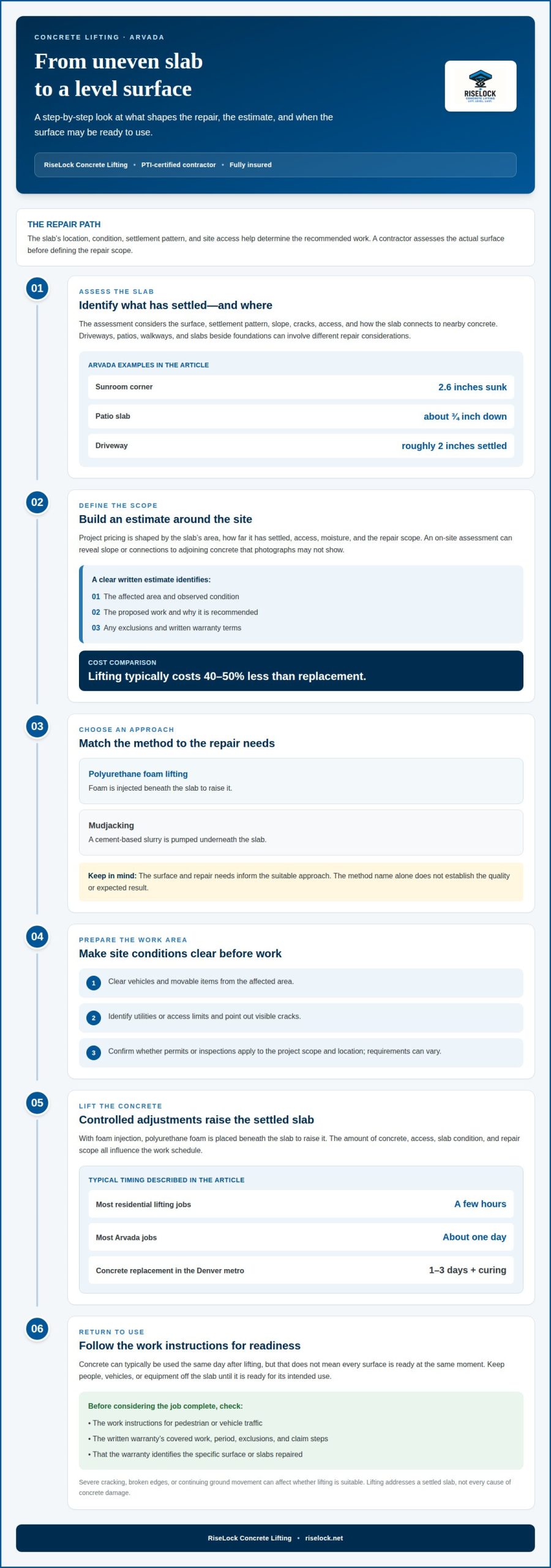
Uneven concrete appears in residential and commercial settings across Arvada. Local examples include a sunroom corner sunk 2.6 inches, a patio slab down about 3/4 inch, and a driveway settled roughly two inches. These differences matter: the slab’s location, slope, cracks, and access help define the repair approach.
Concrete lifting can address settled driveways, patios, walkways, and other slabs. Commercial concrete leveling may also apply to concrete surfaces around business properties. A contractor assesses the affected area and settlement pattern before recommending repair. Across Colorado’s Front Range, soil and site conditions can differ, so an Arvada assessment should focus on the actual slab, not assumptions from another property.
Foam injection places polyurethane foam beneath a slab to raise it; mudjacking pumps a cement-based slurry underneath. The methods use different materials, and the project’s surface and repair needs inform the suitable approach. Neither name alone establishes the quality or expected result of a repair.
When choosing a concrete lifting contractor, look for verifiable credentials and insurance information. RiseLock is a PTI-certified contractor and fully insured. Licensing and insurance are separate matters, and requirements depend on the work and jurisdiction. For work with specific local requirements, confirm those requirements with the relevant issuing authority.
Permits or inspections can depend on the project scope and location. Before work begins, distinguish between lifting an existing slab and more extensive concrete repair, then confirm applicable requirements with Arvada’s building department.
A contractor’s credentials and insurance should be supported by verifiable information, not a business name alone. RiseLock is a PTI-certified contractor and fully insured, providing concrete lifting and leveling for residential and commercial properties. Its assessment considers the slab and the proposed work so the repair scope is clear.
Estimates, pricing, and warranty
A useful estimate connects the visible slab problem to a defined repair scope. For a patio, that means noting its area, uneven edges, cracks, access, and how water or moisture may affect the supporting ground. In Denver and Arvada, these site details help explain why concrete repair estimates can differ.
RiseLock provides project pricing after a quote request. Slab area, settlement, access, moisture, and repair scope all shape the estimate. An on-site assessment can reveal details photographs may miss, such as the slab’s slope or its connection to adjoining concrete. The written estimate should identify the affected area, proposed work, and any exclusions.
A useful estimate distinguishes the observed condition from the proposed repair and explains the reason for the recommendation. Before approving work, make sure the estimate describes the affected surface and scope clearly. Keep any agreed payment terms documented separately so the repair description and payment arrangement are easy to understand.
Review any written warranty terms carefully, including what completed work is covered, the coverage period, exclusions, and how to make a claim. A warranty does not replace understanding the repair method or the cause of settlement. For example, terms for patio work should identify the specific patio repair they cover.
Before approving an estimate, compare its scope with the slab conditions recorded during assessment. Confirm that the document names the work area, the proposed repair, and warranty terms, rather than relying on a verbal summary. For a concrete repair estimate, review the project details with RiseLock Concrete Lifting to understand how the proposed scope addresses the slab.
Concrete lifting typically costs 40-50% less than replacement.
Project duration and same-day usability
Concrete lifting is generally a shorter process than slab replacement. Most residential lifting jobs take a few hours, and the concrete can be used the same day. In Arvada, most jobs are completed in about one day, while Denver metro projects often take a few hours. The work area and slab condition shape the schedule.
Timing depends on how much concrete needs lifting, access to the slab, and the repair scope. A single settled sidewalk section differs from multiple uneven driveway areas or a large patio. The crew needs access to the slab and makes controlled adjustments, so a larger affected area can require more work time.
Same-day use doesn’t mean every surface is ready at the same moment. Follow the work instructions for when people, vehicles, or equipment can return to the lifted concrete. A pedestrian sidewalk and a driveway used by vehicles have different practical demands, so keep traffic away until the surface is ready for its intended use.
Lifting addresses a settled slab, not every cause of concrete damage. Severe cracking, broken edges, or continuing ground movement can affect whether lifting is suitable. Before work, clear vehicles and movable items from the area, identify utilities or access limits, and point out visible cracks. These details help define the work zone and repair plan.
Don’t assume a project warranty lasts for a particular period based on a general timeline or verbal statement. Any warranty duration, coverage, exclusions, and claim steps should be in the written project terms. Read them alongside the estimate, especially if several slabs are included, and make sure the covered work identifies the surfaces being repaired.
Replacement usually involves a longer schedule than lifting. Concrete replacement projects in the Denver metro typically take 1 to 3 days, plus curing time. That distinction helps explain why a lifted surface may return to service sooner, while replacement needs additional time before use. Ask for the planned work sequence and usability instructions in writing.
Concrete lifting for sunken or uneven surfaces
In Arvada, polyurethane foam lifting and leveling can address sunken driveways, sidewalks, patios, and garage floors. The right repair approach depends on settlement, surface condition, and drainage.
Driveway and Sidewalk Lifting
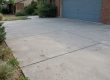
For driveways and sidewalks, the assessment focuses on the direction and extent of the slope, adjoining slabs, and visible cracks. A raised edge or uneven joint can create a trip hazard, while a settled driveway section may disrupt vehicle access. Lifting aims to restore a more level surface. Cracks wider than 1/2 inch in an Arvada driveway are a reason to assess the slab’s overall condition, not just its height.
Patio and Garage Floor Lifting
Patios and garage floors need attention to how the slab meets nearby surfaces. A patio may slope toward a home, while a garage floor may have an uneven transition at its entrance. Concrete leveling can raise settled sections when the slab is suitable for lifting. Crumbling edges or extensive cracking may need concrete repair instead, since raising a damaged surface alone may not address its condition.
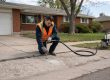
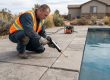
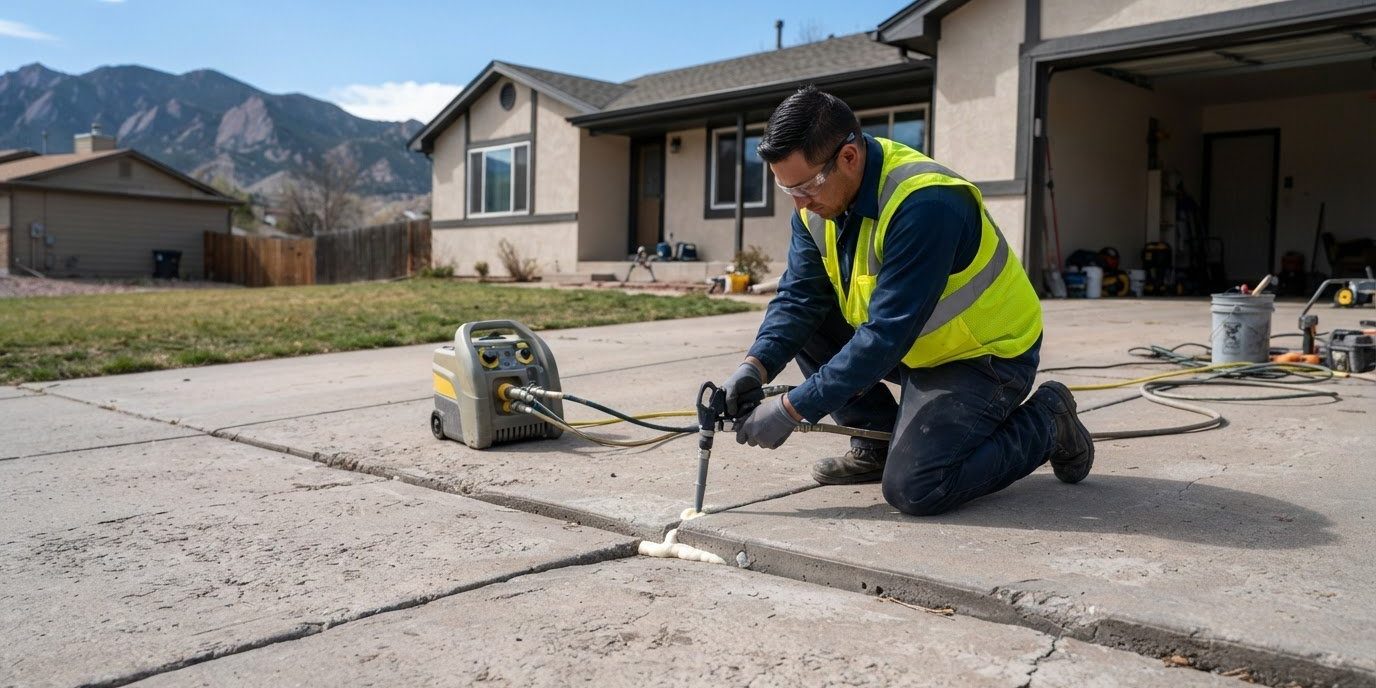
Start by identifying low areas, cracks, and joints. The repair plan should account for water flow and how the slab connects to surrounding concrete. For foam lifting, small holes are drilled in the slab, and polyurethane foam is injected beneath it. The technician raises the sunken section in controlled stages, aiming for a more even surface without treating every crack as a leveling issue.
The key distinction is simple: lifting is for settled concrete that can be raised, while damaged concrete may need repair. When arranging an assessment, describe whether the problem is a driveway edge, sidewalk joint, patio slope, or garage entrance. That helps focus the review on the surface’s condition and intended use.
For an Arvada slab with uneven settlement, request an assessment for concrete leveling and discuss the surface and its visible damage.
RiseLock Concrete Lifting
RiseLock Concrete Lifting addresses settled or uneven concrete with polyurethane foam lifting and leveling, as well as concrete repair. For an Arvada driveway, patio, sidewalk, or garage floor, the first step is assessing the surface and deciding whether leveling or repair fits the problem. RiseLock also provides post-tension installation and tendon repair and replacement.
When comparing licensed and insured concrete lifting in Arvada, ask for clear project details, including the proposed work, estimate, applicable written terms, and expected timing for use. These details help you understand the scope before deciding how to proceed. A documented estimate connects the observed slab condition to the recommended work.
To discuss a concrete concern, contact RiseLock Concrete Lifting.
Set a Clear Plan for Your Concrete
The next step is to turn a visible slab problem into a defined repair decision. Identify the outcome you need: a more even walking path, a smoother driveway transition, or a patio surface that sits correctly beside the home. That priority keeps the project discussion practical and focused.
For licensed and insured concrete lifting in Arvada, clarity matters as much as the repair itself. Make sure the proposed work aligns with the affected surface and your intended use, and keep the written scope and warranty terms together for future reference. If the slab’s condition points toward a different repair approach, understanding that distinction helps you make an informed choice.
RiseLock Concrete Lifting can help you discuss the concrete concern and the work that may address it. Contact RiseLock Concrete Lifting to take the next step toward a clear plan for your slab.
Frequently Asked Questions
How much do concrete slabs cost?
Concrete slab costs depend on the project rather than one standard rate. The area, slab thickness, surface finish, site access, and preparation required all affect the scope. A new slab also differs from lifting an existing one, so identify whether you need replacement, repair, or leveling before reviewing an estimate. For properties in Arvada and nearby Denver-area communities, the written scope should clarify which work is included.
How much does concrete lifting cost in Arvada per square foot or slab?
Concrete lifting in Arvada is priced according to the project, not a universal per-square-foot or per-slab rate. The affected area, settlement, access, and repair needs shape the estimate. A small patio section and a driveway with several uneven areas may call for different scopes. RiseLock provides project pricing after a quote request, based on the specific concrete work proposed.
What warranties do Arvada concrete lifting companies offer?
Review written warranty terms for coverage, exclusions, duration, and claim procedures. RiseLock states, “We guarantee the job is done right.” For work in Arvada, make sure the project documents clearly identify the covered work and any applicable terms. To discuss a settled or uneven slab, contact RiseLock for a project assessment and estimate.