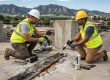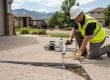
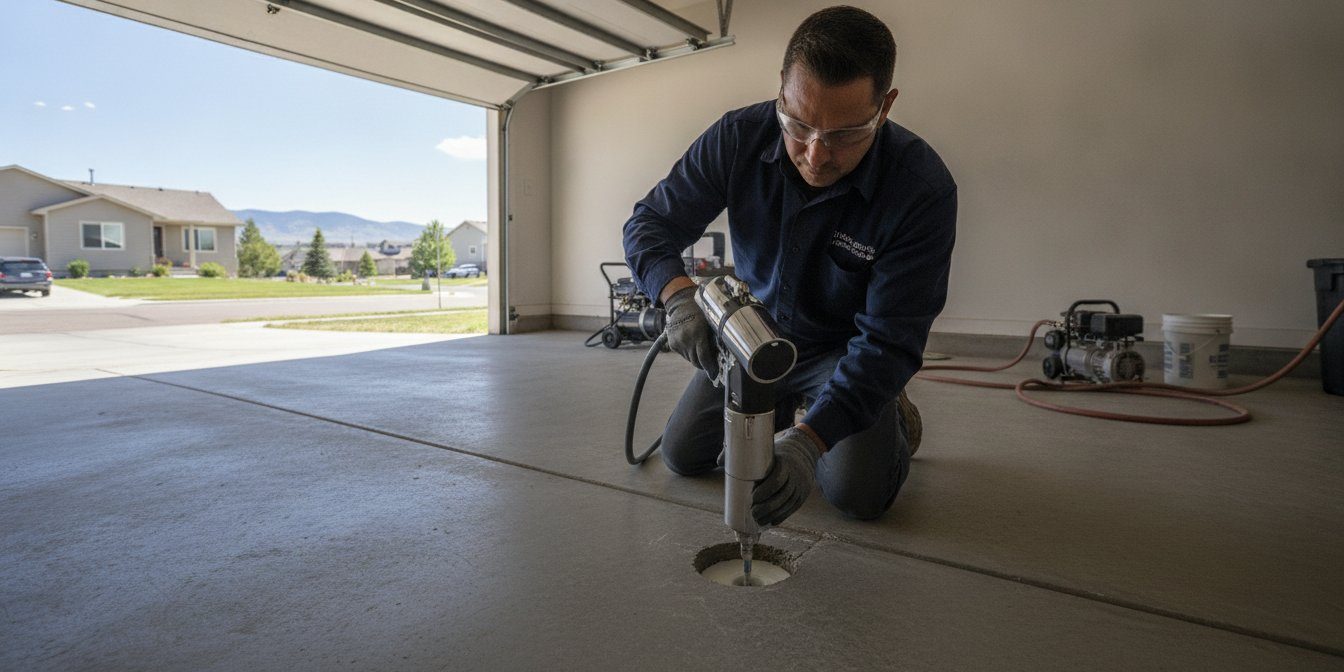
Tearing out a sunken concrete slab is often an unnecessary and expensive disruption that overlooks the actual root of the problem. You’ve likely noticed widening gaps in your garage or felt the frustration of a trip hazard on your patio, and the anxiety surrounding potential foundation damage is a heavy burden to carry. When searching for concrete leveling for uneven floors Lakewood property owners frequently assume that jackhammers and new pours are the only path forward. It’s a common misconception that structural restoration must be a messy, weeks-long ordeal.
You deserve a solution that respects both your time and your property’s value. Modern polyurethane injection offers a sophisticated alternative to traditional demolition, focusing on precision and long-term stabilization. This guide will show you how high-density foam restores your floors to a level, safe state that’s ready for use immediately after the work is finished. We’ll examine the technical advantages of this non-invasive process and how it effectively prevents further sinking by addressing the soil conditions beneath your home.
Key Takeaways
- Understand how Lakewood’s expansive bentonite clay and seasonal moisture cycles create the hydrostatic pressure that causes concrete to settle.
- Learn why high-density polyurethane injection is the superior, non-invasive alternative to traditional demolition and messy replacement.
- Discover how professional concrete leveling for uneven floors Lakewood restores structural support by filling underground voids to prevent future sinking.
- Identify the simple preparation steps homeowners can take to ensure a smooth, efficient precision assessment and repair process.
- Realize the value of a modern repair that cures in minutes, allowing you to use your garage or patio immediately after the project is complete.
The Science of Sinking: Why Lakewood Floors Become Uneven
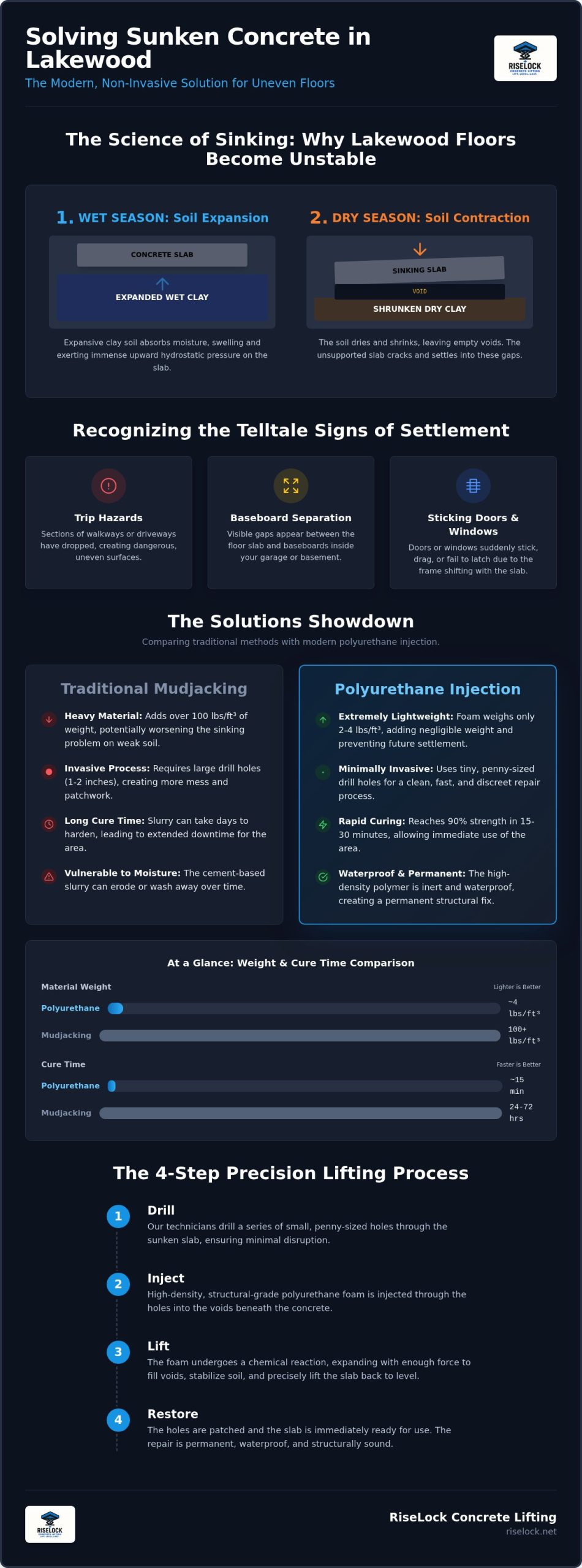
Lakewood sits atop a challenging geological foundation that directly impacts the stability of residential and commercial slabs. The primary culprit for shifting floors in Jefferson County is expansive bentonite clay. This specific soil type acts like a high-capacity sponge, swelling significantly when saturated and shrinking as it dries. This perpetual movement creates a volatile environment for any rigid structure. Homeowners seeking concrete leveling for uneven floors Lakewood often discover that their structural issues stem from this relentless cycle of expansion and contraction.
During Colorado’s heavy spring rains, the soil absorbs moisture and exerts immense hydrostatic pressure against concrete surfaces. When the dry summer heat arrives, the moisture evaporates, causing the soil to retract and leave behind empty pockets. If the original builders failed to ensure proper soil compaction during construction, these issues are magnified. Over time, the weight of the slab becomes too much for the hollow ground to support, leading to the cracks and dips that compromise your property’s safety. While exterior patios endure the direct expansion of freezing water in joints during the freeze-thaw cycle, interior basement slabs are more affected by the shifting water table and soil shrinkage beneath them.
Professional restoration requires an understanding of these underground dynamics. Different concrete leveling techniques address these problems with varying levels of success, but the goal remains the same: stabilizing the environment beneath the slab to prevent future movement.
The Role of Expansive Soils in the Front Range
Lakewood’s soil doesn’t just move; it fundamentally changes the architecture of the ground. When the clay shrinks during dry spells, it creates a “void” phenomenon where the concrete appears intact on the surface but lacks any structural support underneath. This lack of support often results in “stair-step” cracking. These cracks follow the path of least resistance, breaking the slab into sections as it settles into the new gaps. Without intervention, these voids allow for further water accumulation, which only accelerates the damage during the next heavy rain.
Signs Your Lakewood Property Needs Professional Leveling
Recognizing settlement early can prevent more significant structural damage and liability issues. Addressing concrete leveling for uneven floors Lakewood requires a technical understanding of these common indicators:
- Trip hazards: Look for sections of driveways or walkways where one slab has dropped significantly below its neighbor.
- Baseboard separation: Noticeable gaps appearing between the floor slab and the baseboards in finished basement rooms or garages.
- Functional obstruction: Doors or windows that suddenly stick, drag, or fail to latch properly, suggesting the interior slab has shifted.
Identifying these signs allows for a precise intervention. It’s an essential step in moving away from the stress of structural damage toward the long-term security of a stabilized floor.
Polyurethane Injection: The Modern Solution for Interior Floor Leveling
Polyurethane injection represents the pinnacle of modern structural restoration for residential properties. The process begins with the strategic drilling of small, penny sized holes through the affected slab. Through these access points, we inject a specialized, high density polyurethane foam that triggers a controlled chemical reaction. This reaction causes the material to expand rapidly, filling any underlying voids and generating enough force to lift tons of concrete with surgical precision. It’s a method that prioritizes technical mastery over brute force.
One of the most significant advantages of this method is the speed of the cure. Unlike traditional materials that require days to harden, high density foam reaches its functional strength in approximately 15 to 30 minutes. This efficiency means your floors are ready for foot traffic and furniture almost immediately after we complete the injection. For homeowners seeking precision structural repairs, this method provides a permanent fix without the prolonged downtime associated with a new concrete pour.
Why We Choose Polyurethane Over Traditional Mudjacking
We prioritize polyurethane because it addresses the core weakness of traditional mudjacking: weight. Standard mudjacking slurry often weighs over 100 pounds per cubic foot. In Lakewood’s volatile soils, adding that much mass can actually accelerate future sinking by overloading the already weakened ground. In contrast, our high density foam weighs only 2 to 4 pounds per cubic foot. It provides the necessary lift without the risk of causing additional settlement through its own weight.
The foam’s chemical composition also makes it entirely moisture resistant. It won’t wash away or erode during Lakewood’s intense spring runoff, ensuring the repair remains stable for years. Because the equipment is compact and the injection holes are minimal, the process is remarkably non invasive. We don’t need heavy machinery on your lawn, and there’s no slurry mess to manage during or after the project.
Precision Leveling for Interior Slabs
Interior leveling requires a higher degree of delicacy than outdoor work. We take extensive measures to protect finished flooring, whether you have carpet, tile, or hardwood, by using specialized port seals and protective barriers. Our technicians utilize an incremental lifting technique, raising the slab in small, controlled stages. This careful progression is vital to prevent secondary damage, such as cracking in your interior drywall or door frames.
Slab-on-grade refers to a shallow foundation where the concrete floor is poured directly onto the prepared soil surface, making it the primary target for interior leveling interventions. By focusing on these specific structural elements, we ensure a level result that restores both the safety and the aesthetic integrity of your home. When managing concrete leveling for uneven floors Lakewood technicians evaluate your specific floor layout to determine the most effective injection pattern for long term stability.
Structural Stabilization vs. Cosmetic Fixes
Effective concrete leveling for uneven floors Lakewood involves much more than correcting a visual slope. Many homeowners fall for the “replacement myth,” believing that pouring new concrete is the ultimate fix. However, if the underlying soil remains unstable, a new slab will eventually sink into the same voids that claimed the original. True restoration focuses on the sub-grade environment, ensuring the concrete has the necessary support to remain level for years to come. This structural stabilization turns a temporary cosmetic fix into a long term solution that protects your property’s value.
A critical component of this process is void filling. When soil settles or washes away, it leaves pockets of air that invite water accumulation. This trapped water worsens the expansion of Lakewood’s clay soils, leading to the hydrostatic pressure issues discussed earlier. By injecting high density foam, we fill these cavities completely, displacing water and creating a solid, moisture resistant base. This structural stabilization prevents the repetitive cycle of sinking that plagues many Front Range properties by sealing the underside of the slab against the elements.
The RiseLock Advantage: Engineering-Grade Precision
Our approach is rooted in an engineering mindset rather than a simple “fill-the-gap” mentality. Because our team has extensive experience in post tension installation, we view every slab as a complex structural element that requires precise intervention. We don’t rely on guesswork. We use advanced laser levels to monitor the lift in real time, achieving tolerances within a fraction of an inch. For a more technical look at the physics behind these methods, our guide on concrete leveling details the specific mechanics of slab restoration.
Addressing Post-Tension Slabs in Lakewood
Many newer homes in the Lakewood area utilize post-tensioned foundations, which contain high strength steel cables under immense tension. Drilling into these slabs for foam injection requires specialized knowledge of cable placement to avoid catastrophic failure. If an inexperienced contractor or a DIY enthusiast accidentally severs one of these cables, the result can be an explosive release of energy that causes severe structural damage or personal injury. We prioritize safety by conducting thorough assessments before any drilling begins, ensuring your foundation’s integrity remains undisturbed throughout the repair process. This level of care is what defines a professional structural partner who views your home’s stability as a personal priority.
Preparing for Your Lakewood Concrete Leveling Project
A successful restoration begins with a detailed blueprint of the existing damage. Before any material is injected, we conduct a precision assessment to measure the exact degree of settlement and identify the specific soil conditions responsible for the shift. This isn’t a cursory glance; it’s a technical evaluation that guides our entire injection strategy. To prepare for the crew’s arrival, homeowners simply need to clear the workspace of furniture, vehicles, or personal items. This ensures our technicians have unobstructed access to the injection points.
The injection process itself is remarkably efficient and methodical. While you will hear the hum of the equipment, the actual work generates minimal dust and zero structural mess. Most residential projects move through these four critical stages:
- Precision Assessment: Measuring the drop with laser levels to determine the required lift.
- Site Preparation: Drilling penny sized access holes in a strategic pattern across the slab.
- Injection: Carefully pumping high density foam to fill voids and raise the concrete.
- Patching and Cleanup: Filling the injection holes with custom tinted mortar to match your existing concrete as closely as possible.
By following this structured path, concrete leveling for uneven floors Lakewood becomes a predictable and stress free experience for the property owner.
Logistics for Interior Floor Leveling
Interior projects require specialized care to maintain your home’s environment. We use advanced containment strategies to manage air quality and ensure that dust from the drilling process doesn’t spread to other rooms. Most residential projects in Lakewood are completed in a single day, allowing you to return to your normal routine by evening. If your home features hidden utilities or radiant floor heating, our technicians use specialized detection tools to map these systems before any drilling begins. This proactive approach ensures that your concrete leveling for uneven floors Lakewood project proceeds without accidental damage to critical home infrastructure. If you’re ready to secure your home’s foundation, you can schedule a precision assessment with our expert team today.
Maintenance After the Lift
Restoring your floor is a significant step, but protecting that investment requires ongoing attention to your property’s drainage. You must ensure that gutters and downspouts direct water at least five to ten feet away from the foundation. This prevents the soil from becoming saturated, which is the primary cause of the hydrostatic pressure issues discussed earlier. Additionally, we recommend sealing any remaining cracks or joints to stop surface water from re-entering the stabilized soil. While our high density foam is designed for long term security, maintaining a dry perimeter is the best way to ensure the ground beneath your slab remains stable for decades.
Why RiseLock is Lakewood’s Choice for Precision Concrete Raising
RiseLock approaches every project with a level of quiet authority that distinguishes our work from standard repair contractors. We view the structural integrity of your property as a personal priority, applying technical mastery to ensure each lift is both precise and durable. Our specialized expertise in concrete repair in Denver, Colorado, allows us to bring a deep understanding of Front Range geological challenges to every Lakewood neighborhood. When you choose us for concrete leveling for uneven floors Lakewood, you’re partnering with a team that values longevity over quick, superficial fixes.
Our ethical backbone is central to our operation. We only recommend repairs that are structurally sound and fundamentally necessary for the safety of your home. Unlike traditional materials that may erode or shift, the high density polyurethane foam we utilize is a permanent solution. It doesn’t shrink, degrade, or react with the surrounding soil. This commitment to using advanced contemporary materials ensures that your investment is protected against the volatile moisture cycles common in our region. We focus on restoration and stabilization, providing a result that withstands the test of time.
A Dependable Partner for Lakewood Property Owners
We treat your structural challenges with the same care we would apply to our own property. Our commitment to precision is evident in our use of high density foam, which is engineered to handle both residential foot traffic and heavy duty commercial loads. By focusing on stabilization rather than just elevation, we address the root cause of settlement. This methodical approach ensures that once a slab is restored, it stays that way. We take professional pride in our work, maintaining high standards that create an atmosphere of trust and long term security for every client we serve.
Next Steps: Restoring Your Property’s Value
Restoring the safety and value of your property begins with a professional structural assessment. During your initial consultation, Alex Mon or one of our lead technicians will conduct a thorough walkthrough to identify the specific cause of your floor’s settlement. We explain the technical “why” behind our proposed solution, ensuring you understand the advantages of our specific methods. This transparent, informative process is designed to lead you away from the stress of structural damage toward the peace of mind offered by specialized intervention. Protect your Lakewood investment with a precision concrete leveling estimate.
Securing the Future of Your Lakewood Property
Addressing structural settlement requires more than just a flat surface; it demands a technical understanding of the ground beneath your feet. By choosing modern polyurethane injection, you effectively combat the challenges of Lakewood’s expansive soils without the invasive disruption of traditional demolition. This method provides a lightweight, moisture-resistant foundation that stabilizes the slab while filling the dangerous voids that lead to further sinking. Our background in post-tension structural reinforcement and high-density polyurethane foam injection ensures that every repair is handled with the precision your home deserves.
RiseLock remains dedicated to serving Lakewood and the entire Front Range with a commitment to technical mastery and ethical service. We view your property’s stability as a personal priority, leading you away from the stress of structural damage toward a permanent, safe solution. Don’t let trip hazards or shifting foundations compromise your property’s value any longer. Get Your Precision Concrete Leveling Estimate in Lakewood and take the first step toward a level, secure floor. Professional intervention for concrete leveling for uneven floors Lakewood is just a consultation away. We look forward to restoring your peace of mind.
Frequently Asked Questions
Is concrete leveling with polyurethane permanent for Lakewood homes?
Polyurethane injection is considered a permanent solution because the material is chemically stable and does not degrade or shrink over time. Unlike traditional mudjacking slurry, which is organic-based and can decompose, high-density foam remains structurally sound for the life of the concrete. It effectively seals the underside of the slab, preventing future water erosion and maintaining the lift even during Lakewood’s volatile moisture cycles.
How much does concrete leveling for uneven floors in Lakewood cost?
While we don’t provide specific quotes without an assessment, industry data suggests polyurethane foam injection typically costs 50% to 80% less than full concrete replacement. Factors influencing the total include the size of the area, the depth of the voids, and project accessibility. Choosing concrete leveling for uneven floors Lakewood saves you from the high labor and material costs associated with messy demolition and new pouring.
Can polyurethane foam lift a garage floor with a car inside?
High-density polyurethane foam is capable of lifting incredible weight, including garage slabs with vehicles present. The material exerts upwards of 7,000 pounds of pressure per square foot during expansion. However, for maximum precision and safety, we generally recommend clearing the area. This allows our technicians to monitor the lift with laser levels and ensure the slab returns to its exact original position without any physical obstruction.
Is polyurethane foam environmentally safe for my Lakewood yard?
Modern polyurethane foam is an inert, environmentally safe material once it has fully cured. It doesn’t leach chemicals into the surrounding soil or groundwater. Because the material is moisture-resistant, it won’t break down or release particles into your yard during heavy Front Range rainstorms. It provides a clean alternative to traditional methods, requiring fewer resources and generating almost zero waste or runoff during the installation process.
How long do I have to wait to walk on my floors after leveling?
You can walk on your floors almost immediately after the injection is complete. Polyurethane foam reaches 90% of its full structural strength within 15 to 30 minutes of application. This rapid curing time is one of the primary benefits of the technology. It allows homeowners to return to their daily routines and move furniture back into place without the days of downtime required for a new concrete slab.
Will concrete leveling fix the cracks in my floor as well as the height?
Concrete leveling focuses on restoring the height and structural support of the slab, though it often brings cracked sections back together. While the injection process doesn’t heal the physical break in the concrete, it stabilizes the ground to prevent the cracks from widening. Once we achieve a level surface, we patch the injection holes and can seal existing cracks to prevent water from reaching the sub-grade.
Do I need a permit for concrete leveling in Lakewood, CO?
Permit requirements in Lakewood depend on the scope of the work and whether the repair is considered structural. Most minor slab-on-grade repairs don’t require a permit, but it’s essential to verify with the Lakewood Building Department. As of August 2026, permit fees are based on project valuation. We recommend working with registered contractors who understand local codes to ensure your project complies with all current municipal regulations.
What is the difference between mudjacking and polyurethane foam lifting?
The primary difference lies in the material weight and the size of the injection points. Mudjacking uses a heavy slurry of sand and cement that can weigh over 100 pounds per cubic foot, potentially causing further sinking. Polyurethane foam is lightweight, weighing only 2 to 4 pounds per cubic foot. Additionally, foam requires much smaller access holes and offers superior moisture resistance, making it the more durable choice for long-term stabilization.