A settled concrete step may not need to be torn out and replaced. Foam jacking for concrete steps in Aurora can lift largely intact concrete by filling voids beneath it and stabilizing its base. If the concrete is severely cracked or structurally damaged, replacement may be more appropriate.
Uneven steps, porches, and walkways can make everyday access less comfortable. The cause of the settlement helps determine the right repair. This article explains how foam lifting works, which surfaces may be suitable, what can affect project cost, and what to expect during an assessment. It also covers how soil movement and moisture can contribute to sinking in Aurora.
Key Takeaways
- Learn which signs can help distinguish a settled slab that may be lifted from concrete that may need replacement.
- Understand how soil movement, moisture, and drainage can contribute to sinking around Aurora homes.
- See what professionals consider when assessing steps, porches, walkways, and other residential concrete surfaces.
- Identify the project factors that influence a foam-lifting quote, so you know what shapes the recommended repair.
What is concrete leveling?
Concrete leveling raises a settled slab by filling voids beneath it and stabilizing its base. For Aurora homeowners, the main question is whether the existing concrete is sound enough to lift.
Lifting Versus Replacement
Lifting restores an existing slab to a more level position; replacement removes damaged concrete and installs a new surface. A largely intact, settled patio may be suitable for lifting, while severely cracked, broken, or structurally damaged concrete may need replacement. The decision depends on the concrete’s condition, not just how far it has settled.
Polyurethane foam expands beneath concrete, filling empty spaces and raising the slab. This method can level residential surfaces while retaining usable concrete. Replacement is more extensive because it requires removing the existing slab before installing a new one.
Assessing Slab Repair Suitability
A professional assesses the slab’s condition, settlement, and the support beneath it. This helps distinguish movement caused by a void beneath intact concrete from damage to the slab itself. For example, a settled section with a mostly unbroken surface presents a different repair question from concrete broken into pieces.
The assessment also considers whether the area beneath the slab can support it after lifting. Polyurethane foam fills voids, raises the concrete, and stabilizes its base. If the concrete has extensive structural damage, lifting alone may not address the problem, and replacement may be more suitable.
Cost and Potential Savings
Concrete lifting and replacement involve different scopes of work, so an estimate depends on the surface and its condition. A professional evaluates the affected area, access, degree of settlement, and whether the slab can be lifted or needs replacement. These factors shape the repair plan and cost; a general price would not reflect the differences between projects.
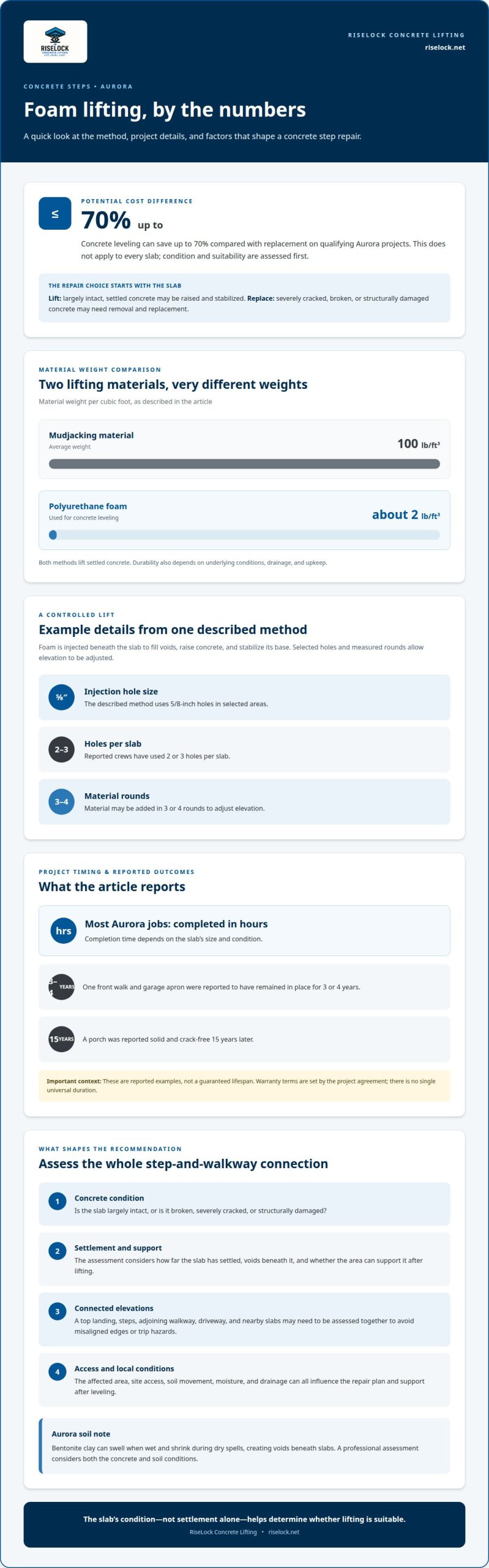
For qualifying projects in Aurora, concrete leveling can save up to 70% compared with replacement. That figure applies to eligible work, not every slab. The assessment determines whether the concrete’s condition makes lifting a practical alternative.
Permit Requirements
Whether a permit is required to raise or repair concrete steps in Aurora depends on local requirements and the project’s scope. Raising an existing slab differs from work that alters its structure, so the proposed work matters.
Sinking Concrete in Aurora?
Settling can affect driveways, walkways, porches, patios, steps, and pool decks. The surface, condition of the slab, and soil movement help determine whether leveling is suitable.
Residential Surface and Step Leveling
For Aurora homes, concrete leveling can address uneven driveway panels, walkways, porch slabs, patios, steps, and stoops. Professionals assess how the surfaces meet, where trip hazards occur, and whether an interior slab or pool deck has settled. To find a licensed and insured contractor in Aurora, review local concrete-lifting providers’ stated credentials and insurance information before hiring.
Concrete Suitability for Leveling
Suitability depends on whether the concrete is sound enough to be raised as a stable surface. An intact, settled step or stoop presents a different repair case from a broken slab. An estimate should reflect the affected area, settlement, and access, rather than treating every driveway or walkway as the same project.
Foam and Mud Slurry Methods
Foam and mud slurry both lift settled concrete, but their weight differs. Mudjacking material averages 100 pounds per cubic foot; polyurethane foam used for leveling weighs about 2 pounds per cubic foot. Durability depends on underlying conditions, drainage, and upkeep. Reported results vary: one front walk and garage apron remained in place for 3 or 4 years, while a porch was reported solid and crack-free 15 years later. Warranty terms are defined by the project agreement, not one universal duration.
Risks and Local Conditions
Foam jacking cannot restore concrete that is broken or structurally damaged, and uneven lifting can leave a surface out of level. Aurora’s soil and moisture changes also matter: bentonite clay can swell when wet and shrink during dry spells, creating voids beneath slabs. These conditions may affect support after leveling. A professional assessment considers both the slab and the soil conditions before recommending a repair.
A project assessment for concrete leveling can identify the surface’s condition and the support it needs.
Concrete steps and other residential surfaces
Repairing sunken front steps involves more than the treads. The top landing, adjoining walkway, and route to the driveway form connected transitions. A professional assesses their elevations together, since lifting one section alone can leave an edge misaligned. Uneven joints may create trip hazards along sidewalks or between a porch and garage apron, so each connection matters.
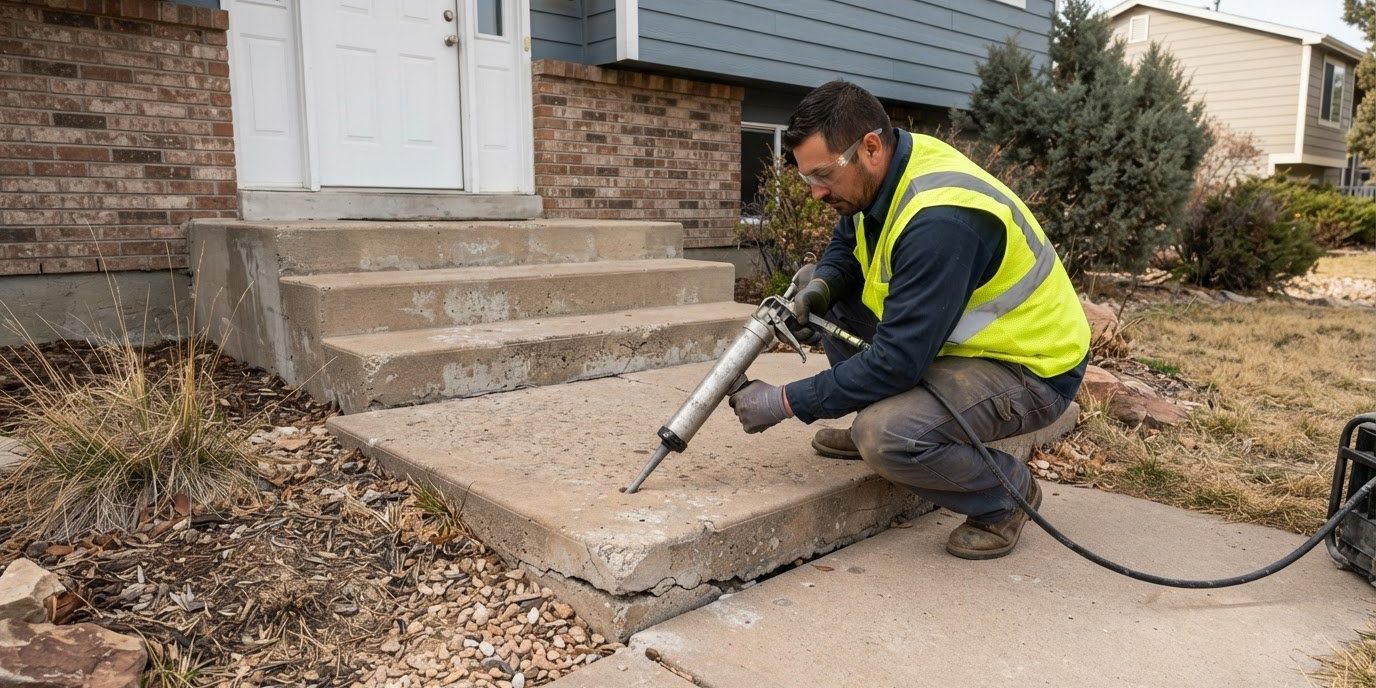
Foam lifting works beneath a slab, where expanding material fills voids and raises concrete. One described method uses 5/8-inch holes in selected areas. Reported crews have used 2 or 3 holes per slab, then added material in 3 or 4 rounds to adjust elevation. These details show why step and landing alignment calls for controlled adjustment, rather than one unrestricted lift.
Residential applications can include porch steps, separate stoops, patios, sidewalks, and garage aprons. Nearby slabs may settle differently, so a professional considers each surface and connection. A driveway panel should meet the next panel without an abrupt lip, and a walkway should connect cleanly to the porch landing. For interior concrete floors, the assessment considers the slab’s condition and whether lifting can address settlement beneath it.
In Aurora, most concrete lifting jobs are completed in hours, depending on the slab’s size and condition. Before work begins, clear vehicles, furniture, and other obstacles from the area to give the crew access to steps, sidewalks, and the garage apron. Assess connected surfaces as one access route, then plan the lift around sound concrete and settled sections. For a suitable slab, retaining the existing concrete avoids removing and replacing it, reducing demolition-related disruption.
What factors affect the cost of foam lifting concrete steps?
A foam-lifting estimate reflects the work needed to raise and support the steps, not a standard price. In Aurora, the assessment considers the slab’s size, condition, access, and degree of settlement. A small stoop and a broad set of steps with a connected landing require different repair plans. The extent of the voids beneath the concrete also affects the lifting work.
Step geometry matters. A professional considers how the treads, risers, landing, and adjoining walkway meet, since uneven connections may need careful adjustment. Largely intact concrete requires a different scope of work from a cracked or broken surface. If the damage makes lifting unsuitable, replacement may be appropriate, which changes what the estimate includes.
Access and site preparation also shape the project. A clear path to the steps gives the crew room to work; obstacles can complicate access. The assessment considers nearby slabs and whether they need to align with the raised steps. In Aurora, soil conditions are another factor: close to two thirds of the ground beneath some communities is clay, which swells when wet and shrinks as it dries. These changes can affect support beneath concrete.
The price depends on the case and is given after a quote request. The estimate reflects the surface’s dimensions and condition, the required lift, access, and the supporting soil. No single factor determines the scope; their combined effect informs the repair plan. For a project-specific estimate, request a concrete lifting quote based on the steps and surrounding surfaces that need attention.
RiseLock Concrete Lifting: Foam Concrete Lifting
RiseLock provides polyurethane foam lifting for settled concrete steps and residential surfaces that are suitable for lifting. The process fills voids beneath the slab, raises the concrete, and stabilizes its base. For steps, the assessment considers how the treads, landing, and adjoining walkway align, helping determine whether lifting can address the settlement or concrete repair is more appropriate.
If your Aurora steps or nearby surfaces have settled but remain largely intact, foam concrete lifting may be a practical option. Severely cracked, broken, or structurally damaged concrete may need replacement instead. The right approach depends on the surface’s condition and the support beneath it.
For an assessment of your sunken concrete steps, contact RiseLock Concrete Lifting.
Choose a Clear Next Step for Your Concrete
Start by noting which surfaces have shifted: the steps, landing, adjoining walkway, or several together. Also note whether the concrete appears intact. These details help frame a useful conversation about the repair. For homeowners considering foam jacking for concrete steps in Aurora, an assessment can clarify whether lifting suits the concrete’s condition or another repair is more appropriate.
RiseLock Concrete Lifting also offers Polyurethane Concrete Lifting and Concrete Leveling, along with Post Tension Installation for projects where that service is relevant. The right option depends on the work involved, not on choosing a method before the surface is assessed. Contact RiseLock Concrete Lifting to discuss your concrete steps and the next practical step toward addressing them. A measured assessment can help you move forward with greater clarity.
Frequently Asked Questions
What is the difference between Mudjacking and Polyurethane Concrete Raising?
Mudjacking raises concrete with a slurry, while polyurethane concrete raising injects expanding foam beneath the slab. The materials differ in weight and how they fill underlying voids; polyurethane foam is lighter than mud slurry. For steps beside a landing, the choice also depends on the slab’s condition and whether the existing concrete can be lifted as a unit.
What is foam jacking for concrete steps?
Foam jacking for concrete steps in Aurora uses injected polyurethane foam to raise settled, usable concrete. The crew drills small holes beneath the step or landing and injects foam into the gaps below. As it expands, the foam lifts the concrete, then hardens into a supporting base. Polyurethane foam can support concrete, but its long-term performance depends on the conditions beneath the slab.
How does polyurethane foam jacking compare with mudjacking and replacement for steps?
Polyurethane foam lifting can raise intact, settled steps without removing them. Mudjacking uses slurry, while replacement removes damaged concrete and installs a new surface. For steps, consider whether the treads and landing remain sound and can be raised together. Foam lifting addresses voids beneath usable concrete; replacement is more appropriate when the concrete itself is severely damaged.
What is the process for foam jacking concrete steps?
A professional first assesses the steps, landing, and adjoining surfaces to understand their condition and alignment. The crew then drills small access holes and injects polyurethane foam beneath the concrete. As the foam expands, the crew adjusts the lift to bring the surface toward its intended position. The foam hardens beneath the slab and supports the raised concrete.
How long does foam jacking concrete steps take, and when can they be used?
Most concrete lifting jobs in Aurora are completed in hours, depending on the concrete’s size and condition. That is the work duration, not a universal reopening time. The foam hardens into a stable base, and the appropriate time to use the steps depends on the completed work. Follow the crew’s site-specific guidance before using the steps again.