A sunken pool deck doesn’t automatically need to be demolished and replaced. Repairing sinking pool deck slabs in Castle Rock can often begin by assessing whether the concrete can be lifted and stabilized; grinding may smooth an uneven surface, but it’s a temporary fix. In most cases, a repaired pool deck is ready to use the same day.
Uneven slabs can interfere with using the pool area, so a quick, lasting solution matters. The right repair depends on what caused the settlement and the condition of the concrete. Replacement is generally a last resort, not the first step. This guide explains common causes, how repair options work, and what affects project timing and cost in Castle Rock. It also outlines the factors professionals consider when choosing an approach.
Key Takeaways
- Learn how soil conditions and water exposure can contribute to a pool deck settling, and why identifying the cause matters.
- Recognize uneven slabs and other signs of damage that can affect safe use of the pool area.
- Understand how a professional assesses whether lifting and leveling may suit the deck, and what can influence repair timing and cost.
- See when concrete repair and polyurethane lifting may offer a practical alternative to replacing the deck.
What Causes Pool Decks to Sink?
Pool decks commonly settle when the soil beneath them wasn’t compacted adequately after pool construction. Loose or disturbed fill can leave unsupported areas, and water moving through the soil may carry fine material away and enlarge voids. According to the National Institute of Standards and Technology (NIST), prolonged exposure to ponding and flooding can corrode steel reinforcement and deteriorate concrete.
In Castle Rock, soil conditions and drainage around a pool affect the stability of the ground beneath the deck. Water entering loose soil can weaken its support, while freeze-thaw movement can stress concrete and shift soil as moisture freezes and thaws.
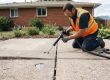
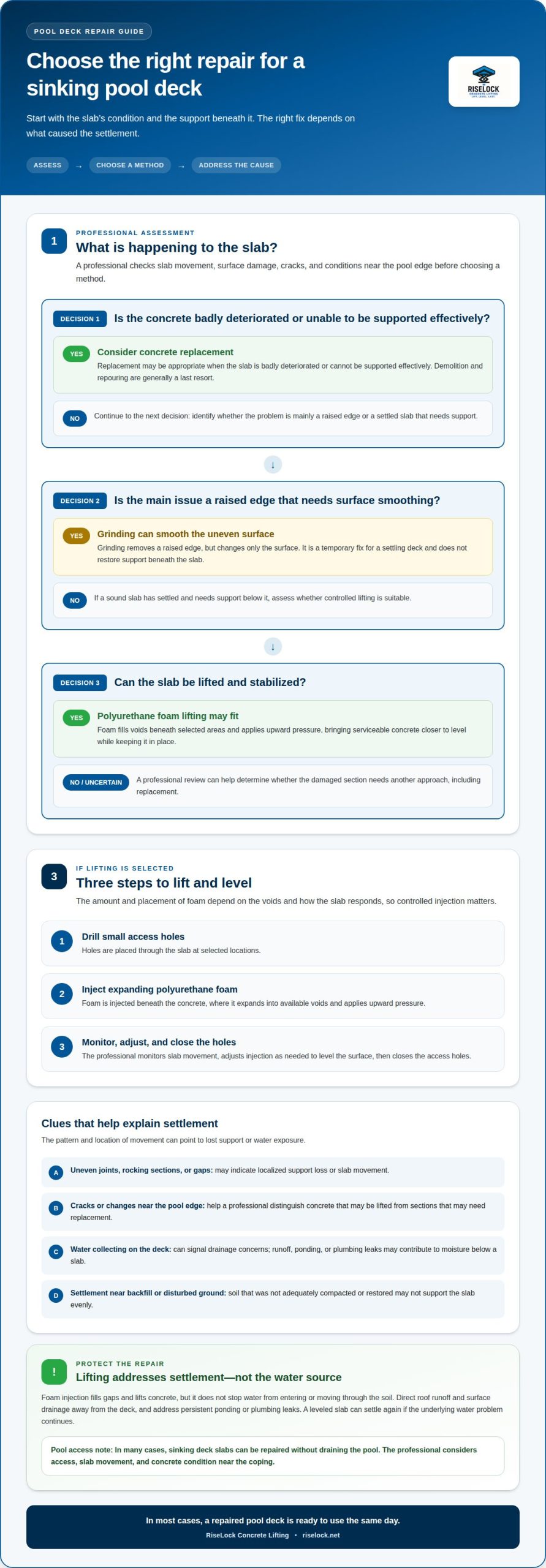
Polyurethane foam lifting fills voids beneath an uneven slab without removing the entire deck. A professional first assesses the slab’s position, cracks, and areas needing support. The process generally follows three steps:
- Small access holes are drilled through the slab at selected locations.
- Polyurethane foam is injected below the concrete, where it expands into available voids and applies upward pressure.
- The professional monitors slab movement and adjusts injection as needed to level the surface, then closes the access holes.
Foam injection fills gaps beneath a slab and lifts the concrete toward a more even position. The amount and placement of foam depend on the voids and how the slab responds, so controlled injection matters. Lifting can address settlement, but it doesn’t stop water from entering or moving through the soil.
To help prevent renewed settlement, direct roof runoff and surface drainage away from the pool deck, and address persistent ponding or plumbing leaks. Limiting repeated saturation of the supporting soil helps reduce a common source of movement. Drainage corrections matter alongside lifting, because a leveled slab can settle again if the underlying water problem continues.
How Can a Professional Repair Sinking Pool Deck Slabs?
Before choosing between lifting, grinding, or replacement, a professional assesses slab movement, surface damage, and pool-edge conditions. To repair sinking pool deck slabs in Castle Rock, the method needs to account for both the concrete’s condition and the support beneath it.
Signs of Concrete Damage
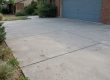
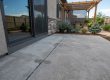
A raised slab edge beside a lower one can create a trip hazard along a pool route. Other signs include cracks, gaps between slabs, rocking sections, or water collecting where the deck should drain. A professional maps changes across the deck, noting whether cracks cross individual slabs or continue toward the pool edge. This assessment helps distinguish uneven concrete that may be lifted from sections that need replacement.
Leveling or Concrete Replacement
Concrete leveling can lift settled slabs while keeping sound concrete in place. Polyurethane foam is injected beneath selected areas, and controlled lifting brings the surface closer to level. Grinding can remove a raised edge, but it changes only the surface and is a temporary fix for a settling deck.
Replacement may be appropriate when concrete is badly deteriorated or cannot be supported effectively. Demolition and repouring are generally a last resort for concrete structures. Concrete replacement often costs double or more than concrete lifting, so preserving serviceable slabs can matter. A professional review of slab movement and repair options can help clarify which approach fits the damage. For homeowners planning to repair sinking pool deck slabs in Castle Rock, the slab’s condition and degree of settlement guide the decision.
Repairing Without Draining the Pool
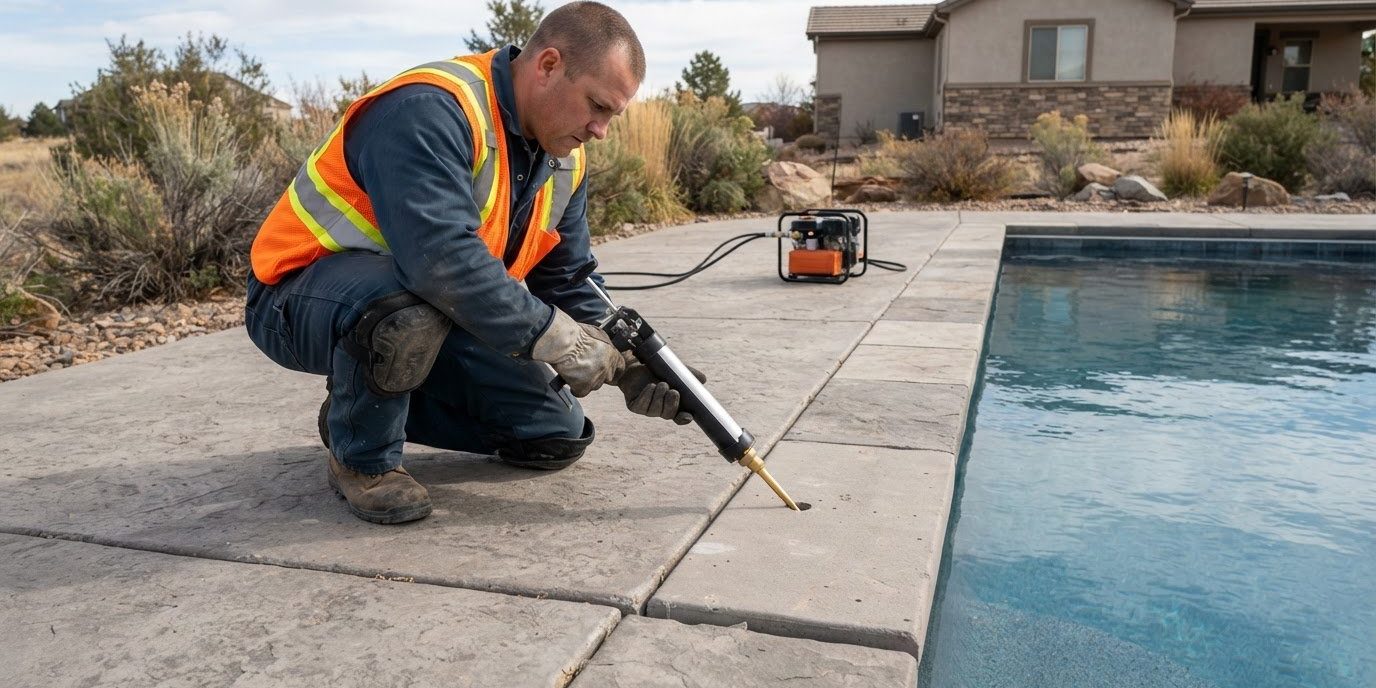
In many cases, sinking deck slabs can be repaired without draining the pool. Foam is injected beneath the surrounding concrete through small access holes, so the pool water doesn’t need to be removed. The professional considers access around the pool, slab movement, and the concrete’s condition near the coping when selecting a repair method.
Keeping the pool filled doesn’t make every deck condition the same. A cracked or unstable slab close to the pool edge may need a different assessment from an isolated uneven section farther away. These distinctions help determine whether lifting, surface grinding, or replacement is suitable.
Common causes of sinking pool deck slabs
Settlement often begins where the ground beneath a pool deck can’t support the slab evenly. Pool decks commonly settle because soil beneath them was improperly compacted after pool construction. A deck may cross both undisturbed ground and backfill, with sections that respond differently beneath the same concrete. One area can remain stable while a nearby section gradually drops, leaving a height difference at the joint. This uneven pattern can point to localized support loss rather than damage across the entire deck.
Water movement is another important factor. Runoff flowing toward the pool can repeatedly saturate soil, while a leaking pool line can introduce moisture below a slab. As water travels through loose soil, it may carry fine particles away and leave gaps in the supporting layer. Ponding can also affect the concrete itself. According to the National Institute of Standards and Technology (NIST), prolonged water exposure from ponding and flooding can corrode steel reinforcement and deteriorate concrete. This deterioration can weaken a slab even when settlement began elsewhere.
Drainage paths can help explain why only certain sections are settling. For example, a low point beside a downspout may receive concentrated runoff, while a slab farther from that flow remains level. A blocked or poorly directed drain can create a similar pattern by allowing water to collect beside the deck. The location and shape of settlement are useful clues during a professional assessment.
Construction and later ground disturbance can also change support conditions. Trenching for pool equipment or plumbing may leave disturbed soil beside a slab. If the soil isn’t properly restored, the concrete above can lose support. Seasonal moisture changes can add movement where the soil is already vulnerable. Identifying whether the main cause is backfill, water, or disturbed ground helps determine a repair that addresses the problem, not just the visible height difference.
Pool deck repair time and cost comparisons
Repair timing and expense depend on how much the concrete has settled, its condition, and the method needed. Comparing lifting, grinding, and replacement helps clarify the trade-offs.
Concrete lifting targets the support beneath existing slabs, so sound concrete can remain in place. A repaired pool deck is ready to use the same day in most cases. The work still depends on access around the pool, the number of affected sections, and how the slabs respond during lifting. These factors shape the repair plan and schedule.
Grinding removes a raised edge from the surface, which can reduce a trip hazard between adjacent slabs. However, it doesn’t restore support beneath settled concrete. Because settlement may continue, grinding is a temporary fix rather than a lasting correction. It may suit a limited surface-height issue, but it won’t address a void beneath the slab.
Replacement involves removing and repouring concrete, so it requires more extensive work than lifting. Concrete replacement often costs double or more than concrete lifting. Replacement may still be needed when concrete is too deteriorated to provide support or when damage extends beyond a difference in level. The condition of each section, access, and the extent of removal all affect the project’s scope.
The estimate depends on the affected area, slab condition, access, and repair method. In Castle Rock, permit or HOA approval requirements depend on the project scope and applicable property rules. Lifting existing slabs and replacing concrete may involve different review processes, so account for applicable requirements before scheduling work.
For a clear comparison of repair approaches, request an assessment of your pool deck.
RiseLock Concrete Lifting: Concrete Repair
RiseLock Concrete Lifting repairs sunken pool deck slabs with concrete repair, leveling, and polyurethane concrete lifting. When settled slabs remain suitable for support, lifting can restore a more even surface while preserving usable concrete. If cracking or deterioration affects the slab itself, the repair approach can account for its condition rather than focusing on height alone.
The next step is a professional assessment of slab movement, visible damage, and the affected area. This helps determine whether lifting or another concrete repair approach suits the deck. Clear findings also help you understand the work involved before deciding how to proceed.
For an assessment of your pool deck, contact RiseLock Concrete Lifting.
Choose a Clear Next Step for Your Pool Deck
Before arranging pool deck work, note where the surface feels uneven, when you first noticed movement, and whether water collects nearby. These details give a professional useful context for evaluating the affected area and discussing suitable repair options. Share any known history of pool construction, drainage changes, or repairs around the deck as well.
If you’re planning to repair sinking pool deck slabs in Castle Rock, start with a focused review of the concrete and its supporting conditions. RiseLock Concrete Lifting provides Concrete Repairs, Concrete Lifting and Straightening with polyurethane foam, and Post-Tension Installation. The appropriate service depends on the project and the concrete’s condition, not simply on how the surface looks.
Start a conversation about your pool deck and the repair approach that may fit your needs. Contact RiseLock Concrete Lifting to discuss the next step, with a clear understanding of the issue and your priorities. A considered repair plan can help you move forward with confidence.
Frequently Asked Questions
What causes pool deck slabs to sink in Castle Rock, Colorado?
Pool deck slabs often sink when the soil below them can’t provide even support. In Castle Rock, note where settlement appears and whether nearby drainage or disturbed ground may contribute. For example, a low section beside a runoff path can point to a different support issue than a slab that shifted after utility work. These patterns help a professional assess the underlying cause.
What are the signs a sinking pool deck needs repair?
Visible slab movement, widening cracks, and a noticeable height difference between adjacent sections can indicate a need for repair. A raised edge along a frequently used path can create a trip hazard, while a crack near the pool coping may need closer assessment. Water collecting in a low spot is another useful clue. A professional considers these signs together rather than judging one crack alone.
How is pool deck slab lifting done with polyurethane foam injection?
Polyurethane foam lifting begins with small access holes drilled through the concrete at selected points. A professional injects expanding foam beneath the slab, monitors its response, and adjusts placement to bring the concrete toward level. For a pool deck, the injection plan accounts for the affected sections and their proximity to the pool edge. Once lifting is complete, the access holes are closed.
How does mudjacking compare with polyurethane foam lifting for pool decks?
Both terms describe approaches to lifting settled concrete, but polyurethane foam lifting uses expanding foam injected beneath the slab. RiseLock uses polyurethane concrete lifting, a modern alternative to traditional mudjacking. For a pool deck, the key question is whether the existing slabs can be supported and leveled or need replacement. The slab’s condition and the repair area guide that assessment.
What does it cost to repair a sinking pool deck in Castle Rock, CO?
The cost depends on the affected area, slab condition, access, and repair method, and is provided after a quote request. For example, a small settled section and widespread damaged concrete involve different scopes of work. The assessment considers whether lifting can address the problem or whether the concrete needs more extensive repair. This helps shape a project-specific estimate without relying on a generic price range.
How long does pool deck leveling take, and when can the pool area be used again?
Most polyurethane lifting projects are completed in hours. The schedule depends on the size and condition of the affected area, access around the pool, and the method used. Before work begins, the repair plan should clarify which areas are being worked on and when they can be used, helping homeowners plan pool access around the project.