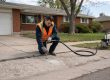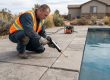
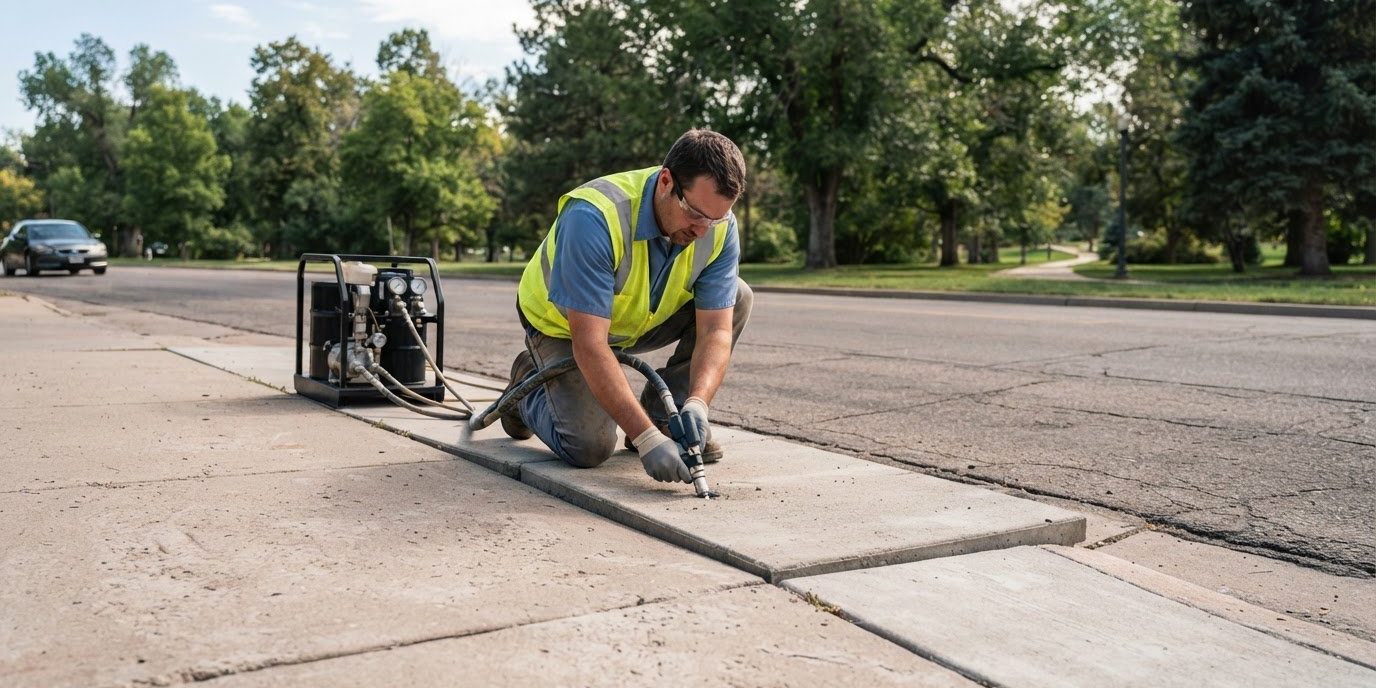
A sunken sidewalk doesn’t always need replacement. Concrete lifting for municipal sidewalks in Colorado Springs can raise settled slabs by injecting expanding polyurethane foam beneath them, helping restore a more even walking surface when the concrete is suitable for repair.
Uneven sidewalks can create access concerns, and deciding what to do depends on the slab’s condition and what caused it to settle. This guide explains common reasons sidewalks sink, how foam lifting works, what affects its cost compared with replacement, and where the service is available in Colorado Springs. You’ll also learn when lifting may be appropriate and when the extent of the damage points toward a different repair. The goal is to make the options clearer, so you can understand what may address the problem without assuming every uneven slab needs to be removed.
Key Takeaways
- Learn how sidewalk damage and settlement are assessed in Colorado Springs, and what those conditions can mean for public institutions and municipalities.
- See which project factors shape the choice between leveling and replacement, and why costs vary with the condition of the concrete and the work required.
- Understand how polyurethane foam lifting can raise and support suitable sidewalk slabs, plus the site conditions that affect whether it’s an appropriate repair.
- Get a clearer picture of service availability for sidewalks and walkways in Colorado Springs and the situations where concrete leveling or repair may help.
Sinking Concrete in Colorado Springs?
Colorado Springs evaluates sidewalk damage based on its condition and settlement. Public walkway work may involve the City, property owners, or institutions. The repair approach depends on the affected surface, access needs, and whether the concrete can be repaired or needs replacement.
Municipal Sidewalk and Public Walkway Repairs
City sidewalk work can include curb, gutter, sidewalk, and pedestrian-ramp repairs. Colorado Springs carries out concrete repairs during spring, summer, and fall, and its Pre-Overlay Concrete program identifies and installs pedestrian ramps in accordance with ADA requirements. For municipal or institutional walkways, assess the surface condition, access needs, and affected panels. The City’s repair backlog may take several years to address.
Local Repair Requests and Slab Conditions
Reported Colorado Springs projects illustrate how uneven concrete varies by site: one driveway slab had settled about 1.5 inches, while another had a 6-8-inch gap beneath it. Other local requests involved an 11×7 porch slab, with no unit stated, and lifting three driveway slabs and three patio slabs. These examples show why an estimate should consider slab condition, surface area, and the work required.
Repair Costs and Panel Replacement
Repair and replacement costs depend on the damage, access, and demolition needs; project pricing is provided after a quote request. Colorado Springs rates settlement of up to 1 inch as low severity, 1-2 inches as moderate, and 2-3 inches as high. Its Cost Share Program applies to high-severity repairs, splitting costs equally between the City and property owner. A noncompliant pedestrian ramp may be replaced at no charge when the owner participates.
Sidewalk Requirements and Trip Hazards
The ADA requires curb ramps on newly constructed or altered streets. Colorado Springs’ settlement categories describe repair severity, not a universal trip-hazard height cutoff. Property owners may wish to notify the City about uneven sidewalks on their property. Permit and utility-clearance steps depend on the site and work scope. Before work begins, identify whether it involves existing concrete, demolition, or ground disturbance, then determine the applicable City process.
Concrete leveling costs and savings compared with replacement
Leveling and replacement address uneven sidewalks in different ways. Leveling raises a suitable slab by filling voids beneath it; replacement removes damaged concrete and installs a new panel. The right option depends on the slab’s condition, adjacent concrete, and the cause of settlement. An estimate should account for the repair area and work required, whether the site is residential or public.
Concrete leveling can avoid demolition when a panel is intact enough to lift and support. Small holes are drilled in the slab, then expanding polyurethane foam is injected beneath it to fill voids and raise the surface. Replacement may be more appropriate if the concrete is badly broken or cannot be restored to a sound, even condition. Costs depend on access, slab dimensions, the amount of material needed, and whether demolition and disposal are involved.
Traditional mudjacking is a separate slab-leveling method. Both mudjacking and polyurethane foam lifting support settled concrete, but they use different materials and installation processes. Soil, drainage, void size, and nearby panels all help determine the repair plan. Sealing serves a different purpose: it addresses joints or surface openings, rather than lifting a sunken slab, so it cannot level concrete that needs to be raised.
To compare options, first identify whether the panel is settled, cracked, or extensively damaged. Then consider whether lifting can restore a stable walking surface or whether removal is needed. The price depends on the case and is given after a quote request, with slab condition, access, materials, and demolition needs shaping the estimate. For a site-specific assessment, a concrete leveling estimate can help clarify which method fits the repair.
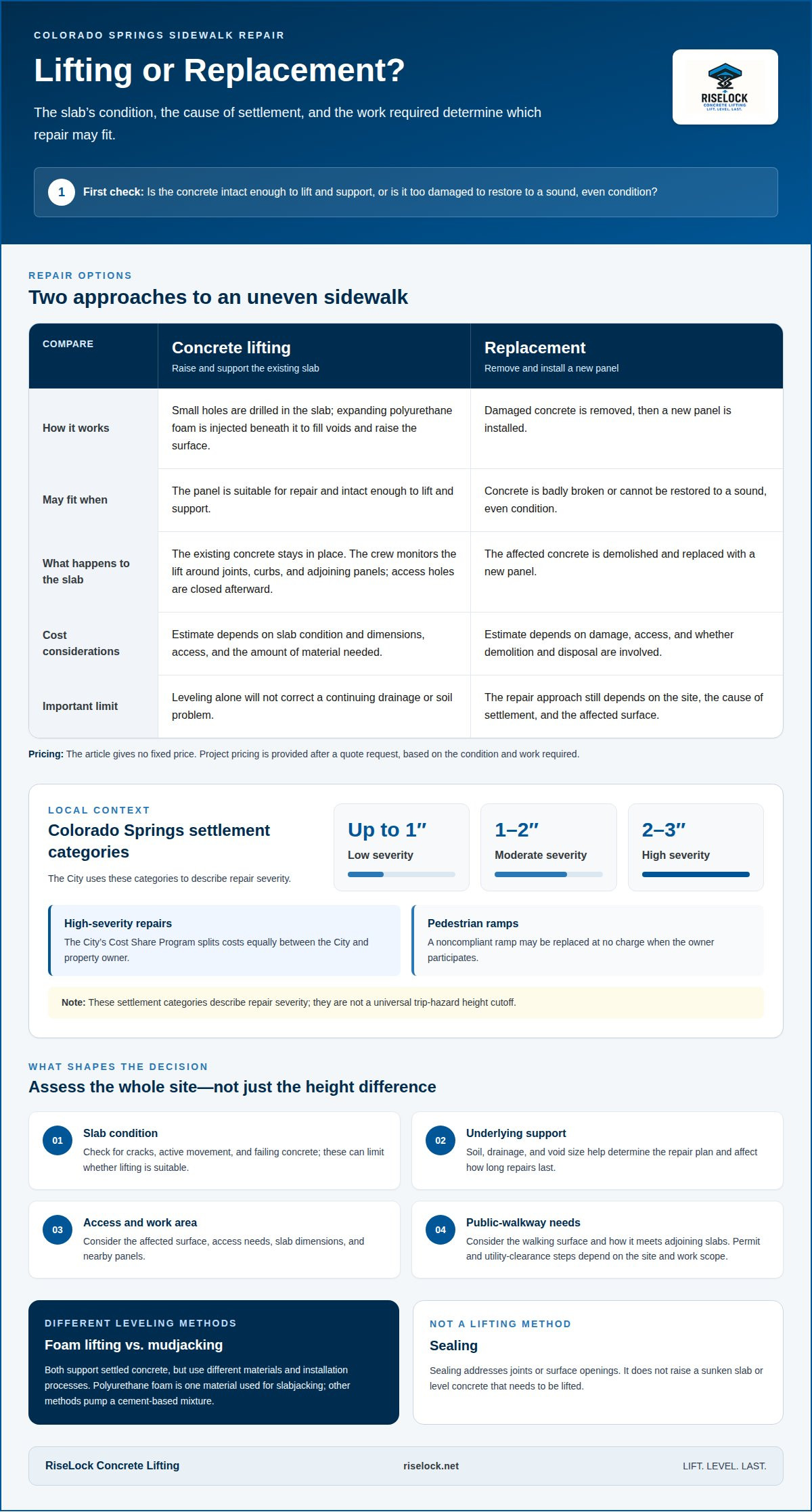
Polyurethane foam lifting for sidewalks and walkways
Polyurethane foam lifting raises a sunken sidewalk by injecting expanding foam beneath the slab. The foam fills voids, expands to lift the concrete, then hardens to create a strong, stable, waterproof base. For a public walkway, this can restore a more even surface without removing the panel. A contractor assesses cracks, settlement, and slab condition to determine whether lifting is suitable.
The process starts with small holes drilled in the slab. Specialized polyurethane foam is injected beneath the affected area, where it expands to fill voids and raise the concrete. The crew monitors the surface as it lifts, including around joints, curbs, and adjoining panels. Once the slab is level, the access holes are closed.
Residential foam lifting and municipal sidewalk repairs use the same basic approach: fill the space beneath settled concrete and restore support. Public paths bring additional considerations, including the walking surface and how it meets adjacent slabs. A driveway may be assessed mainly for access and function, while a sidewalk is part of a continuous pedestrian route. Site conditions, not the project label, guide the repair method.
Slabjacking means lifting concrete by injecting material beneath it. Polyurethane foam is one material used for this purpose; other methods pump a cement-based mixture. Foam lifting may also be used in geotechnical work to fill voids or support soil beneath concrete. The scope depends on where the void is and the condition of the slab.
Cracks, active movement, and failing concrete can limit whether a sunken panel is suitable for lifting. Addressing the underlying support matters: leveling alone won’t correct a continuing drainage or soil problem. Colorado Springs repairs can last for the life of the concrete, depending on conditions beneath the slab, drainage, and upkeep. Those same factors help determine whether lifting can deliver a durable repair or replacement is more appropriate.
Colorado Springs service area
Colorado Springs is the focus for sidewalk and walkway projects discussed here. Concrete lifting for municipal sidewalks in Colorado Springs depends on the site, including access, drainage, and the condition of the surrounding slabs. Local climate also matters: the area averages 16 inches of annual rainfall and has 160 nights at or below freezing. November through March is the peak freeze-thaw window, so drainage and ground support deserve attention during planning.
Colorado Springs projects may involve a municipal route, a public institution’s entrance, or concrete around a home. A driveway near a garage has different access needs from a public sidewalk with adjoining panels. For concrete lifting for municipal sidewalks in Colorado Springs, define the affected area, nearby surfaces, and how people use the route. These details help set the repair scope without assuming every site needs the same solution.
For a local estimate, describe the property location and the concrete involved, such as a sidewalk, walkway, driveway, or garage approach. Note visible settlement, cracks, and drainage paths. For a public walkway, explain how the affected section connects with nearby panels and entrances. Clear site details help establish whether the work concerns one area or connected surfaces.
Colorado Springs freeze-thaw conditions make water movement relevant to lasting results. A raised slab may restore a more even route when the concrete suits repair; extensive damage may call for replacement. Owners and facility managers can focus on slab condition, support below it, drainage, and connections to adjacent concrete. RiseLock serves Colorado Springs and nearby communities, including Denver, Aurora, Centennial, Parker, Englewood, Littleton, Lakewood, Arvada, Thornton, Wheatridge, Castle Rock, Castle Pines, and Boulder. Discuss your local concrete project.
RiseLock Concrete Lifting
RiseLock Concrete Lifting helps property owners and public institutions address uneven concrete with polyurethane lifting and repair services. When a slab has settled but remains suitable for repair, foam lifting can restore a more even walking surface without removing the concrete. More extensive damage may call for another repair approach. The decision depends on the slab, its support, drainage, and how the walkway connects with surrounding concrete.
For a municipal sidewalk or public walkway, share the location, visible settlement, cracks, and how the route is used. These details help frame the repair and determine whether foam lifting or another concrete repair approach fits the site. Contact RiseLock Concrete Lifting to discuss your sidewalk or walkway project.
Plan the Next Step for Your Sidewalk
A sidewalk repair affects more than one concrete panel. At a public site, consider how the repaired area will connect with adjacent walkways and support consistent access. Concrete lifting for municipal sidewalks in Colorado Springs may be suitable when settled concrete remains in repairable condition. Let the site’s condition and repair goals guide the approach.
RiseLock Concrete Lifting provides polyurethane concrete lifting, concrete leveling, and post-tension installation. For sidewalk or walkway concerns, its concrete services can address uneven or damaged surfaces with a repair approach suited to the project. Start by describing the affected area and what needs repair, whether it’s a public walkway or another concrete surface.
Contact RiseLock Concrete Lifting to discuss your sidewalk project and its repair needs. A considered next step can help move the surface toward a more usable condition.
Frequently Asked Questions
How Do I Know if My Concrete Needs Leveling?
Consider leveling when a slab has settled but remains largely intact. A panel that tilts toward a doorway, forms a raised edge beside another slab, or collects water may need attention. Cracks, crumbling edges, and movement underfoot can point to more extensive damage. The key question is whether the concrete can be raised and supported or needs a more substantial repair.
How Does Concrete Get Unlevel?
Concrete becomes uneven when the ground beneath it shifts or loses support. Water can move soil or create voids, and poor drainage can weaken the base. In Colorado Springs, freeze-thaw cycles can also affect moisture in the ground around slabs. A sinking sidewalk, driveway, or patio may have several contributing causes, so the conditions beneath the concrete matter.
Who is responsible for sidewalk repair?
Responsibility depends on the city and the sidewalk’s location. In Colorado Springs, property owners are responsible for promptly notifying the City about sidewalk hazards on their property. That reporting duty does not by itself establish who pays for each repair. For a sidewalk beside a public institution or shared walkway, identify the property boundary and responsible public entity before planning the work.
Why Choose a Professional Sidewalk Contractor?
A professional can assess whether a sidewalk is suitable for lifting, needs concrete repair, or requires replacement. That assessment considers the slab, support beneath it, and nearby drainage, rather than focusing only on an uneven edge. RiseLock’s foam-lifting process uses small drilled holes to inject expanding polyurethane foam beneath the slab and raise it. The assessment helps match the repair method to the site.
Who is responsible for sidewalk maintenance and concrete lifting in Colorado Springs?
Property owners should promptly report sidewalk hazards on their property to the City of Colorado Springs. The City’s Concrete Cost Share Program applies to repairs rated high severity, with the City and owner splitting eligible repair costs equally. If an owner participates, the City replaces a noncompliant pedestrian ramp at no charge. These programs are separate from routine hazard reporting.
What does concrete sidewalk lifting cost per square foot in Colorado Springs?
There isn’t a single per-square-foot price that applies to every sidewalk project. The price depends on the case and is provided after a quote request. Factors include the area and condition of the slab, the size of voids beneath it, site access, and whether preparation or demolition is needed. Those details help establish whether lifting or replacement better fits the work.